The Design Challenge
How might we transform a theater lobby from a space people simply pass through into an experience that
begins telling the story before the curtain rises?
We designed Encore, an interactive luggage exhibit that lets guests discover the lives of Titanic
characters through their personal belongings, combining physical props, lighting, motion-triggered
interactions, and character-driven audio.
Concept
What can a suitcase tell you about the person who packed it?
Instead of recreating scenes from the musical, we designed each luggage station as a window into a
character's life.
Guests could explore trunks, discover personal belongings, read letters and journals, and listen to
characters tell their own stories as they packed their suitcases before boarding the ship, building an understanding of who they were
before ever seeing them on stage.
The experience also transformed through the run of the production, allowing the story in the lobby to change
alongside the show.
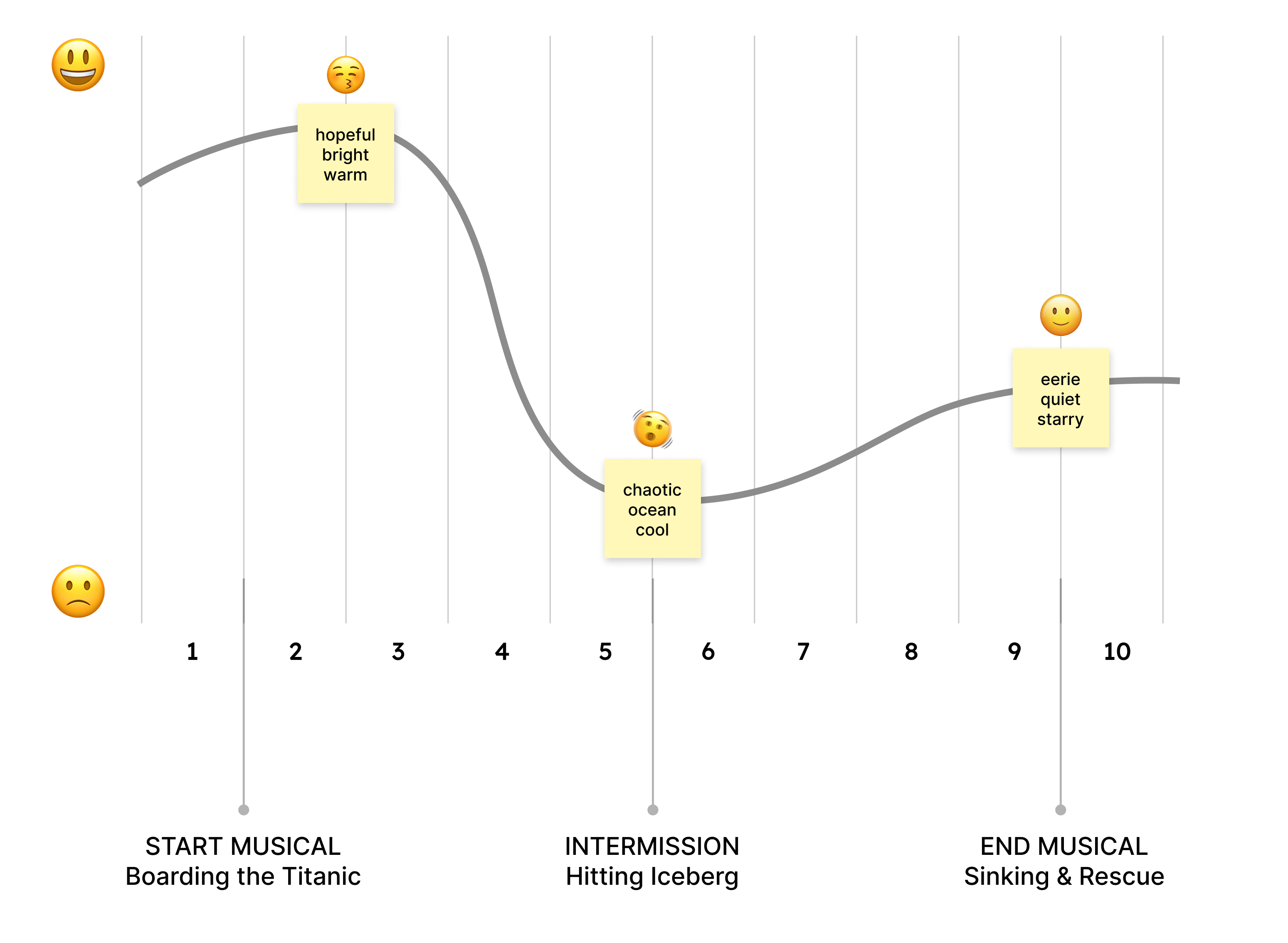
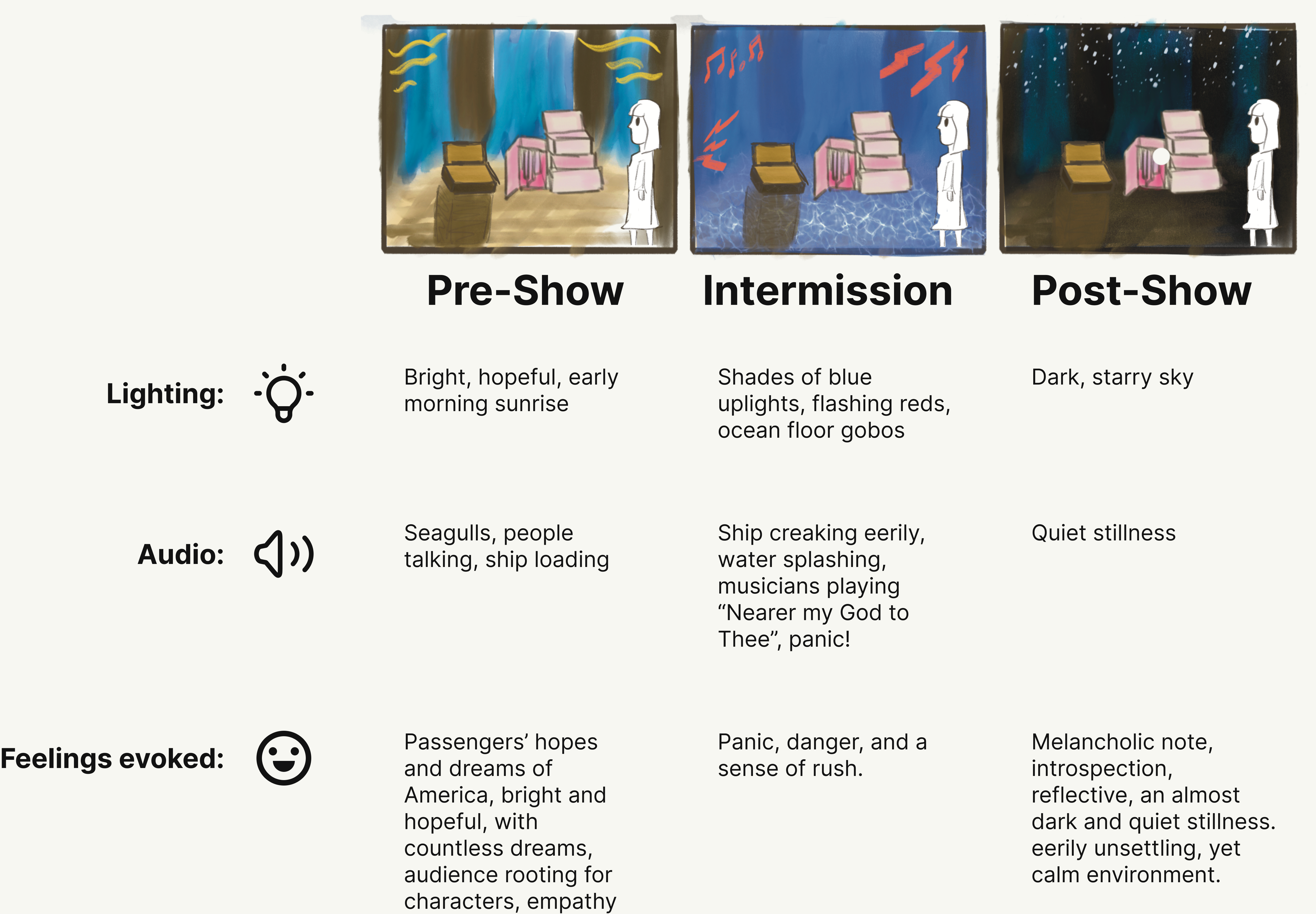
Emotional arc, and experience changing with phases of the show
Challenges
- encouraging guests to touch and interact with the exhibit,
- creating user journeys that
feel complete even if the guest misses one or two phases of the experience, and
- maintaining a strong narrative with lighting design for the
one matinee show we have.
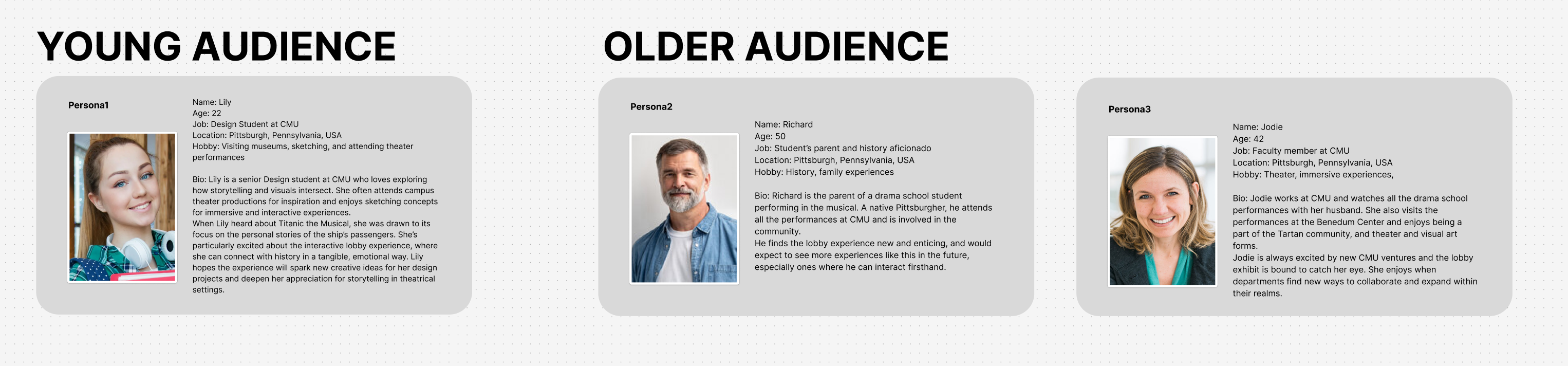
Audience Personas
Mostly older audience (50+) and students - observed during playtests of other shows in the same lobby.
According to client and frequent audience faculty members, we are to expect a greater ratio of older
audience for this show.
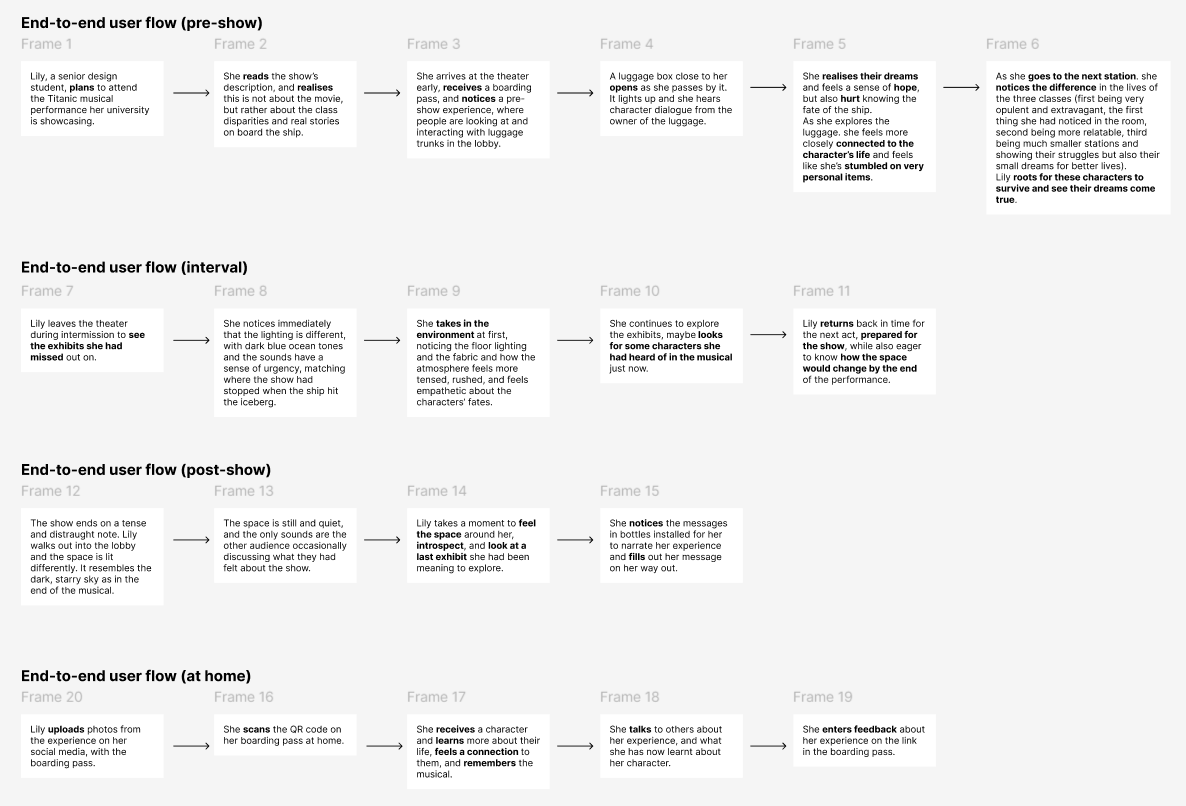
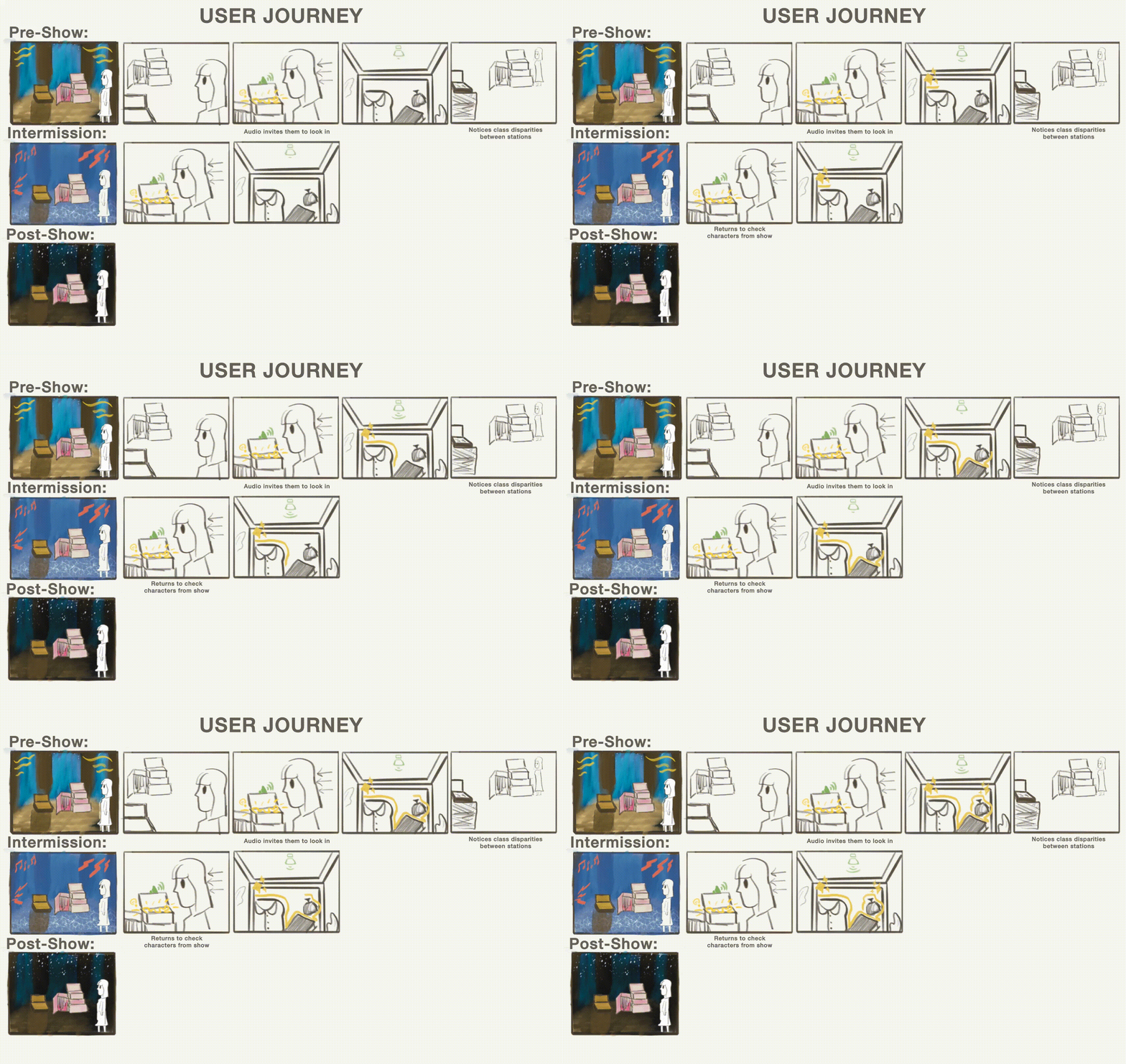
User Journey - Interactions
As the user walks past a luggage station, a motion sensor detects their presence and the trunk opens, with a
programmed light tracing the outlines of the props inside, encouraging them to interact with it. We would
use
directional speakers to play an audio recording of the character narrating, also triggered by the motion
sensor.
The guests can explore the props inside - rift through the characters' clothing, read their diaries
and letters,
examine their possessions, and thereby understand and empathise with their stories.
Design Evolution & Insights
Design principles helped us in various stages of our process:

Character Selection
Our client and us had different ideas on whether we should be using characters from the musical or shine
the spotlight on ones that weren't featured. Building a user journey map made us understand how
using new
characters would distract the guests from both, our experience, as well as our clients, as they would
expect to see these characters in the musical, and also exit during the intermission and search for an
interesting character they had seen on stage.
Adding Immersive Exhibits
We wanted means to collect feedback and guage how immersed guests are without having to fill
feedback
forms. We thought of a hanging net of messages in bottles exhibit, where we got feedback that it was not
period-accurate. We moved on to a postcard exhibit, as the ship was also a mailing ship, but faculty
feedback told us that people would not really write a postcard. We then took inspiration from the ship's
Marconi room and made our own version of their telegram system, and took the liberty to make it
voice-enabled.

Playtesting for Guest Needs
Playtesting this idea, we realized that guests would feel freer to talk if they knew what they said
was
anonymous, so we tried iterating different modifications - messages appearing randomly, new ones
showing
up later, multiple existing messages, until we finally came up with wave-like visuals of messages flowing
together, forming an ocean. These were only possible through user research, playtesting, and frequent
modifications and feedback sessions.
Role
crafting user journeys and personas for our young and old audience, and making sure the
experience
feels complete even if they miss any or more of the three parts.
conducting extensive research into the characters' lives, who they were to others, and
how they
each spoke or wrote, and mimicing these to create stories for their journals,
diaries, and pocketbooks.
creating a strong and engaging narrative for the whole experience, to ensure
guests
connect with these characters.
prop design and fabrication!
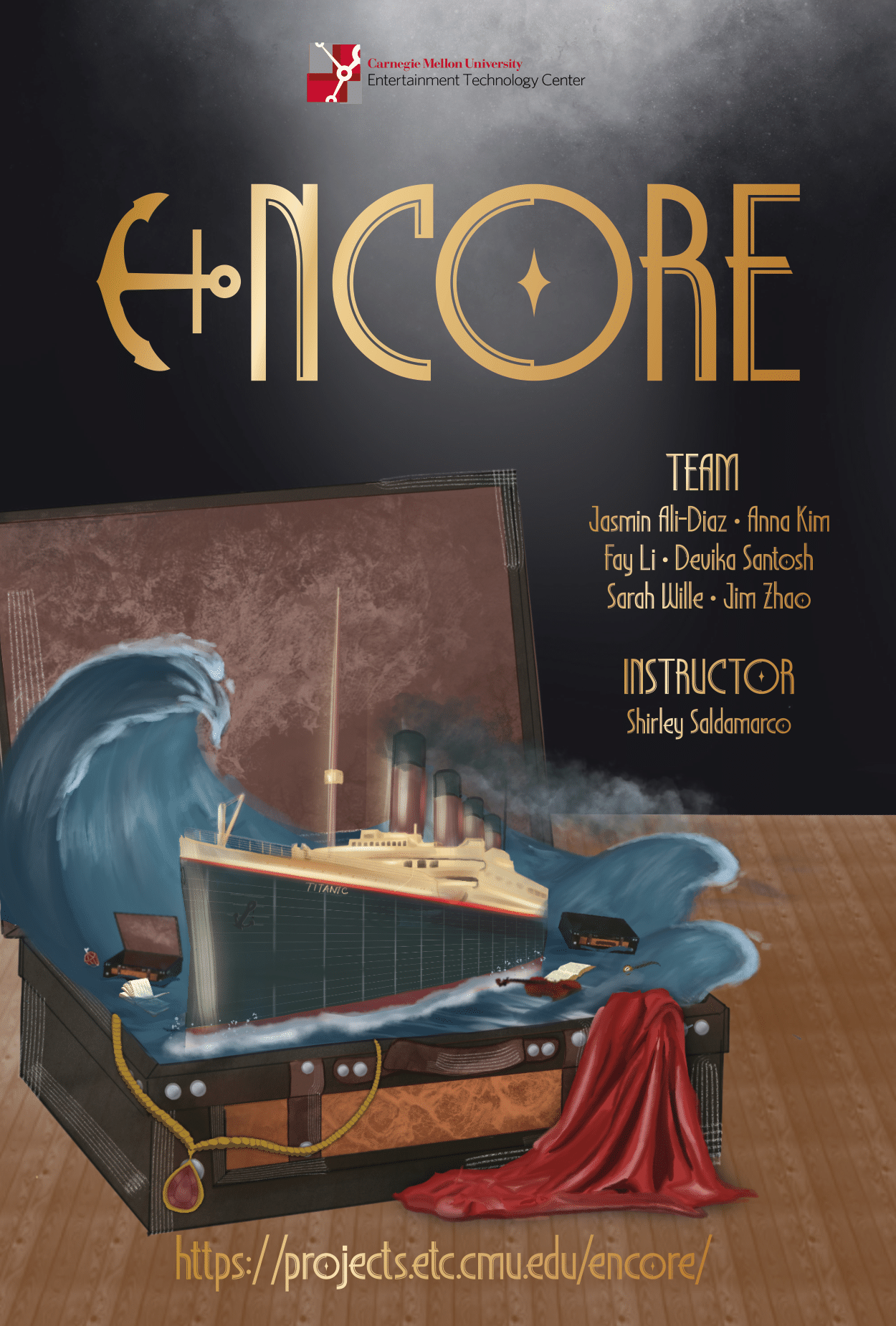
For the Entertainment Technology Center, I am designing our team's logo, poster, and half sheet,
too.
Character Study
Designing the Narrative
I spent a lot of time researching characters, collecting their life story as a real person and analysing
their character in the musical, before selecting props to tell their story.
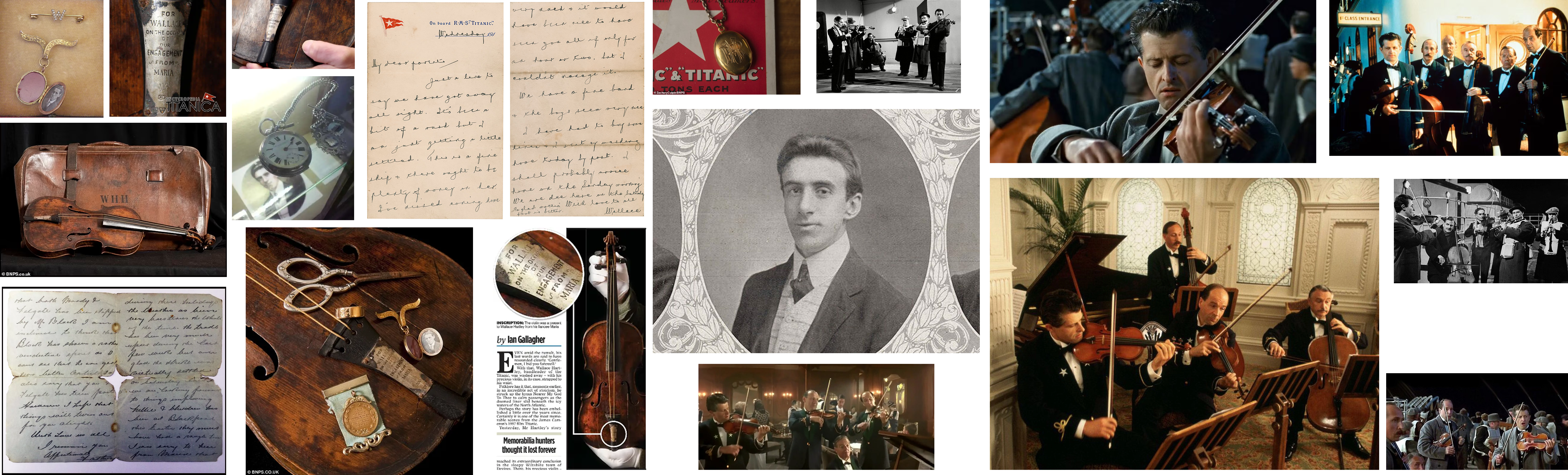
Character study for the musician - Wallace Hartley
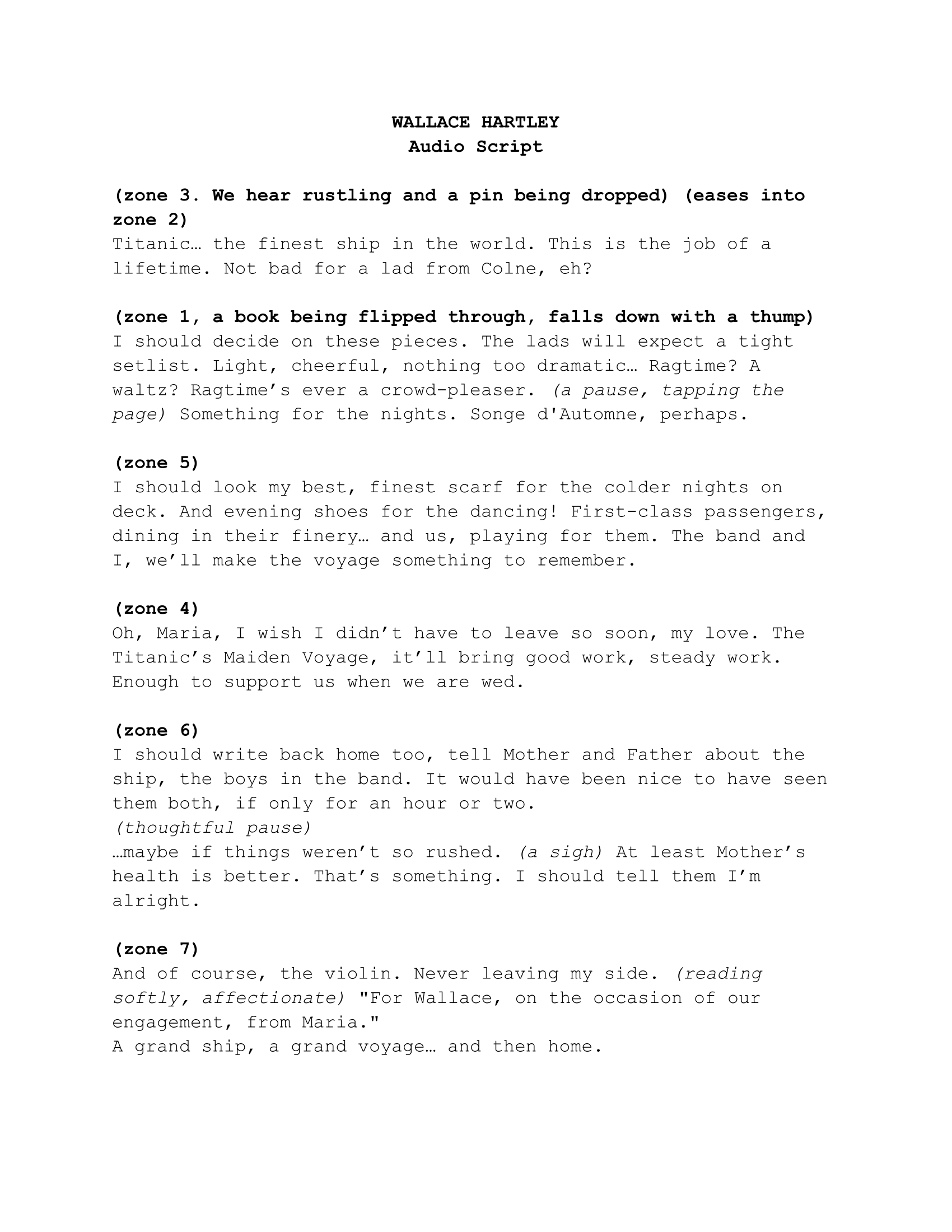
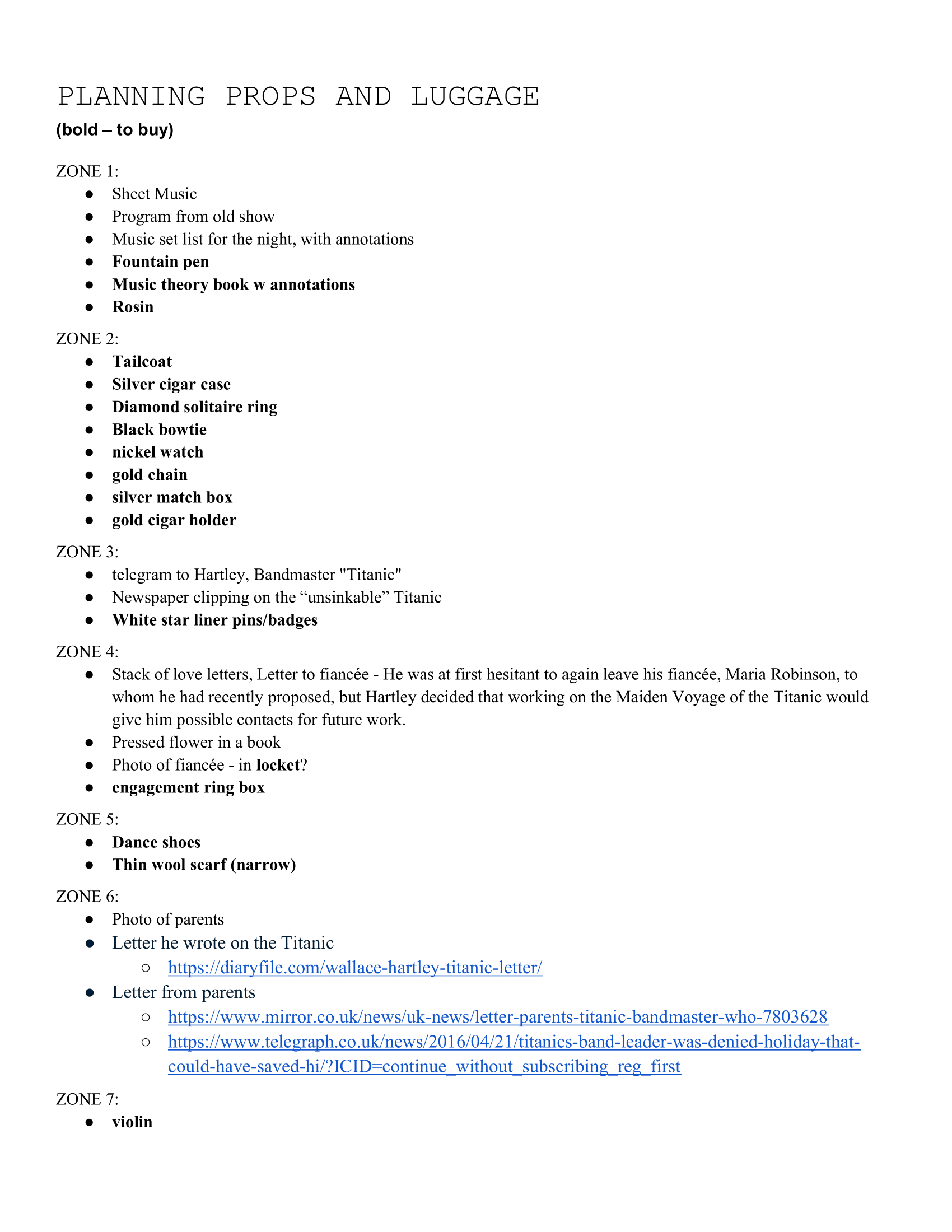
Audio script for Wallace packing his suitcase before boarding the ship, and
planning props
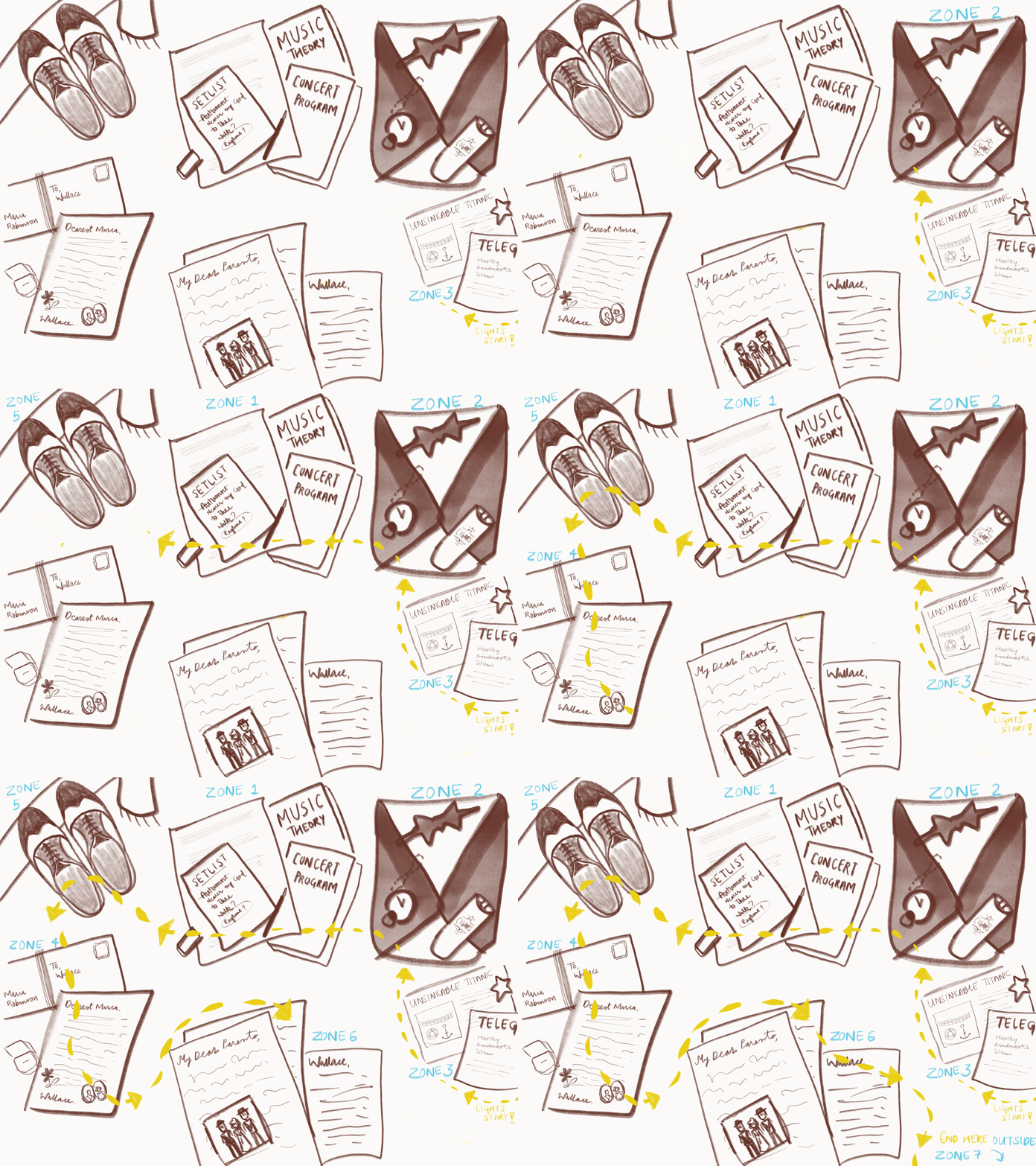
Planning props for the luggage exhibit
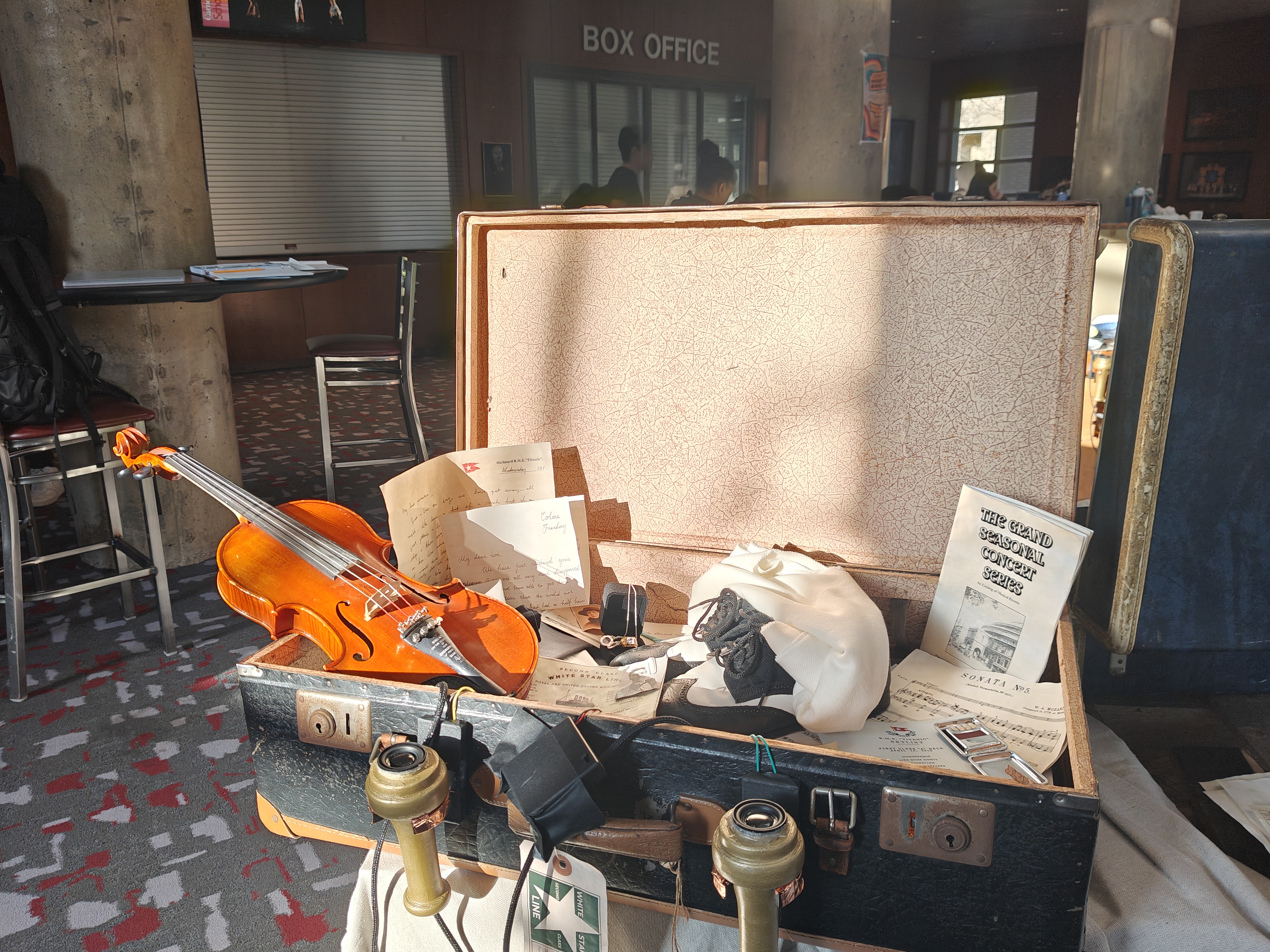
The final installation for Musician Wallace Hartley
Graphic Design - Prop Fabrication
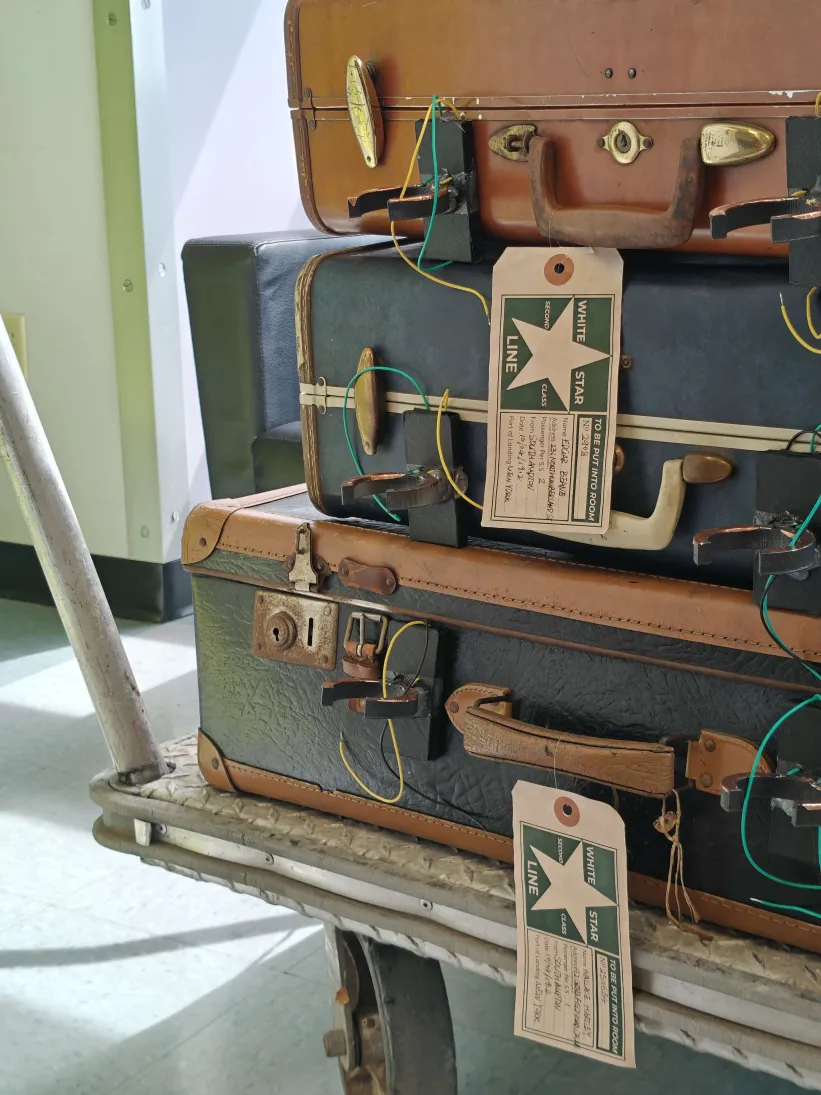
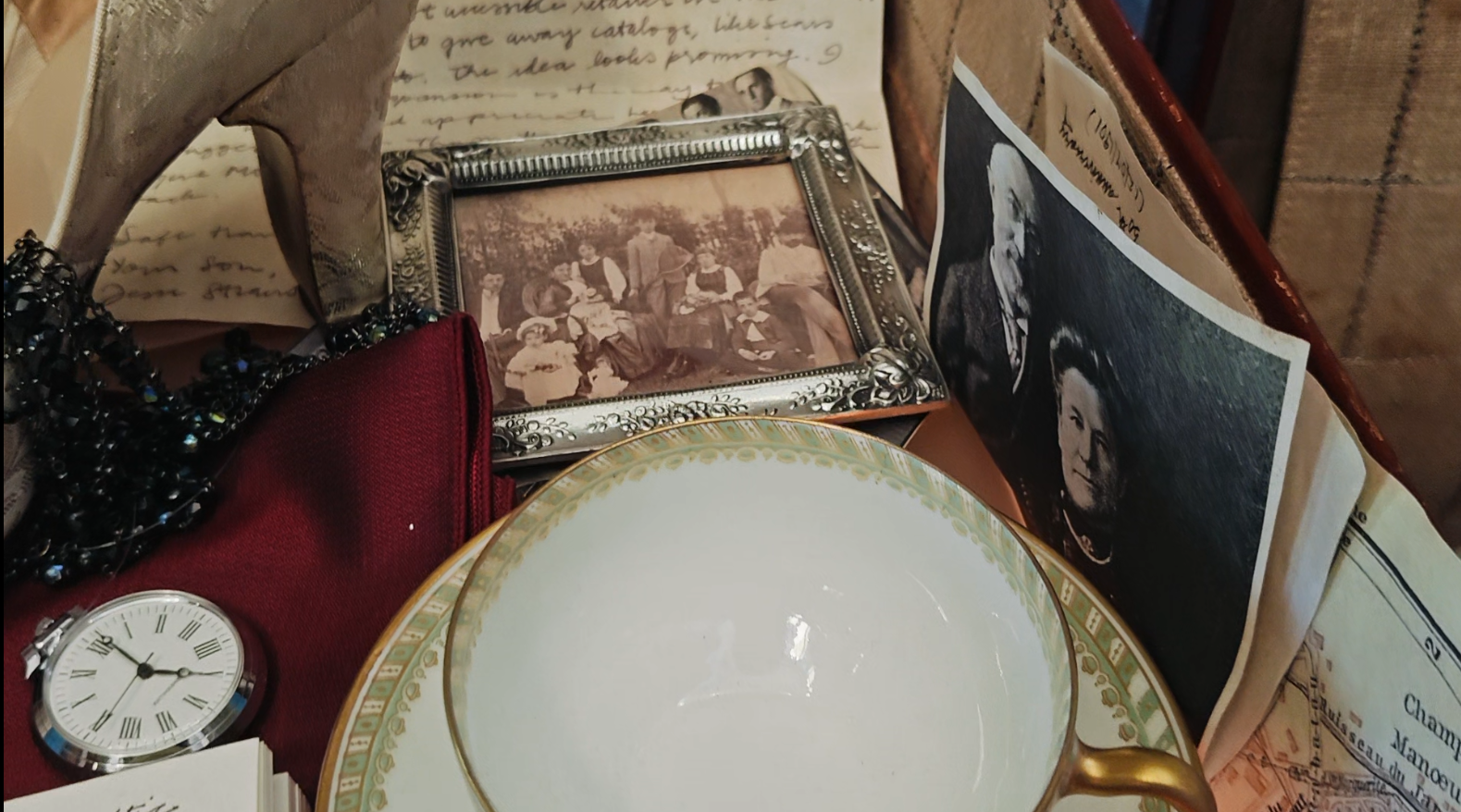
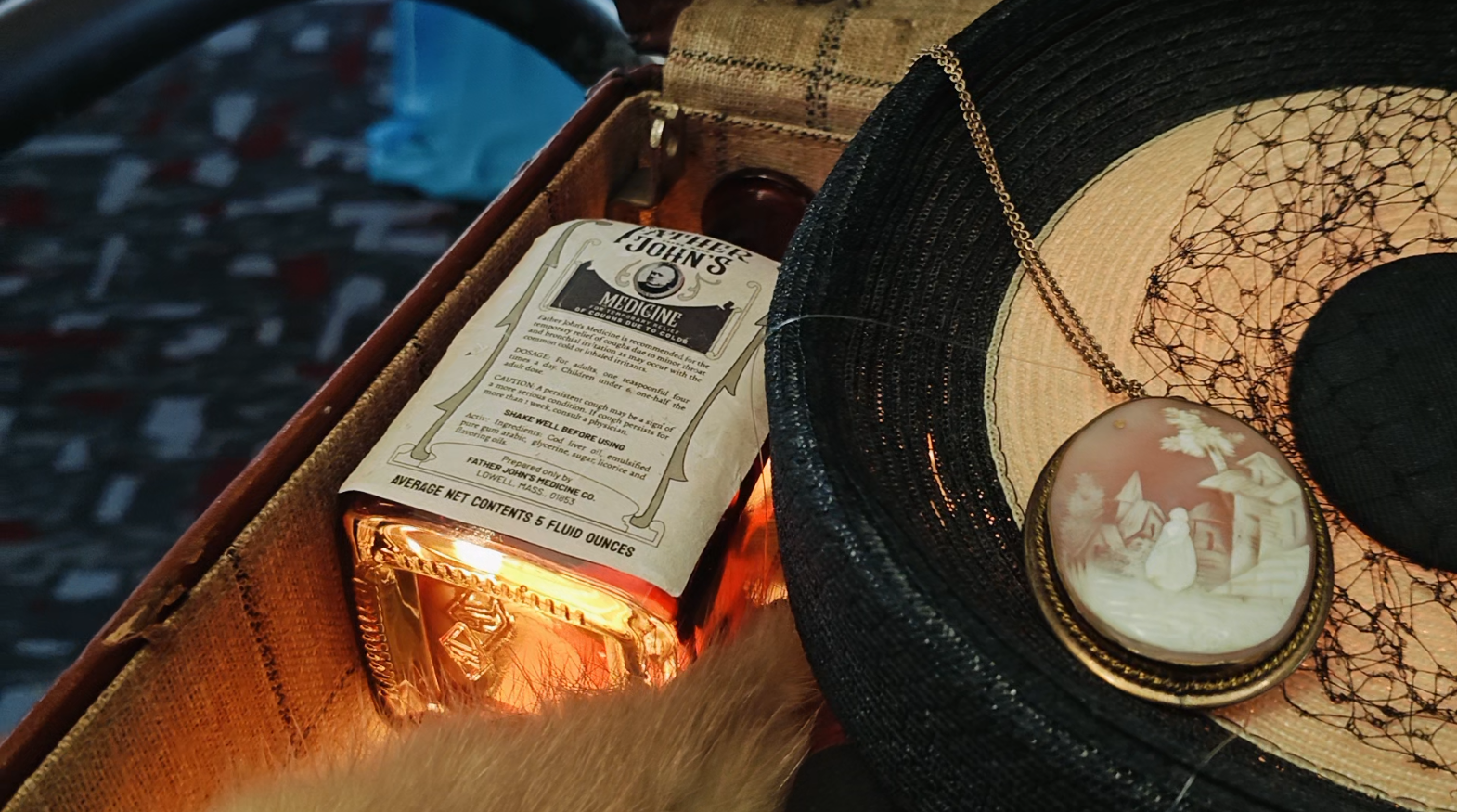
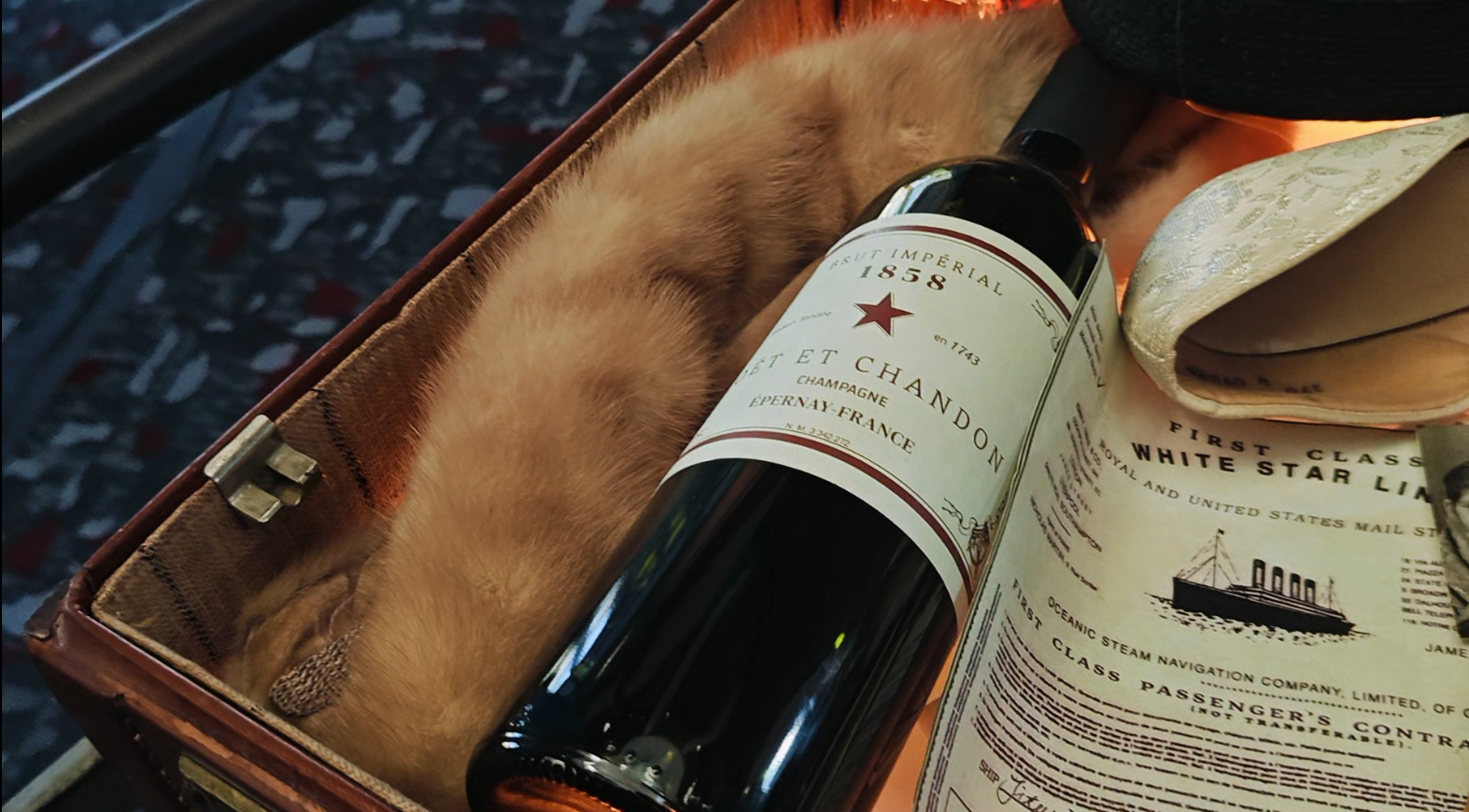
I designed paper props for print on Figma to fit the Art Nouveau time period and replicated many old
tickets, luggage tags, bottle labels, while also making tabloids, music programs, and magazines from
scratch.
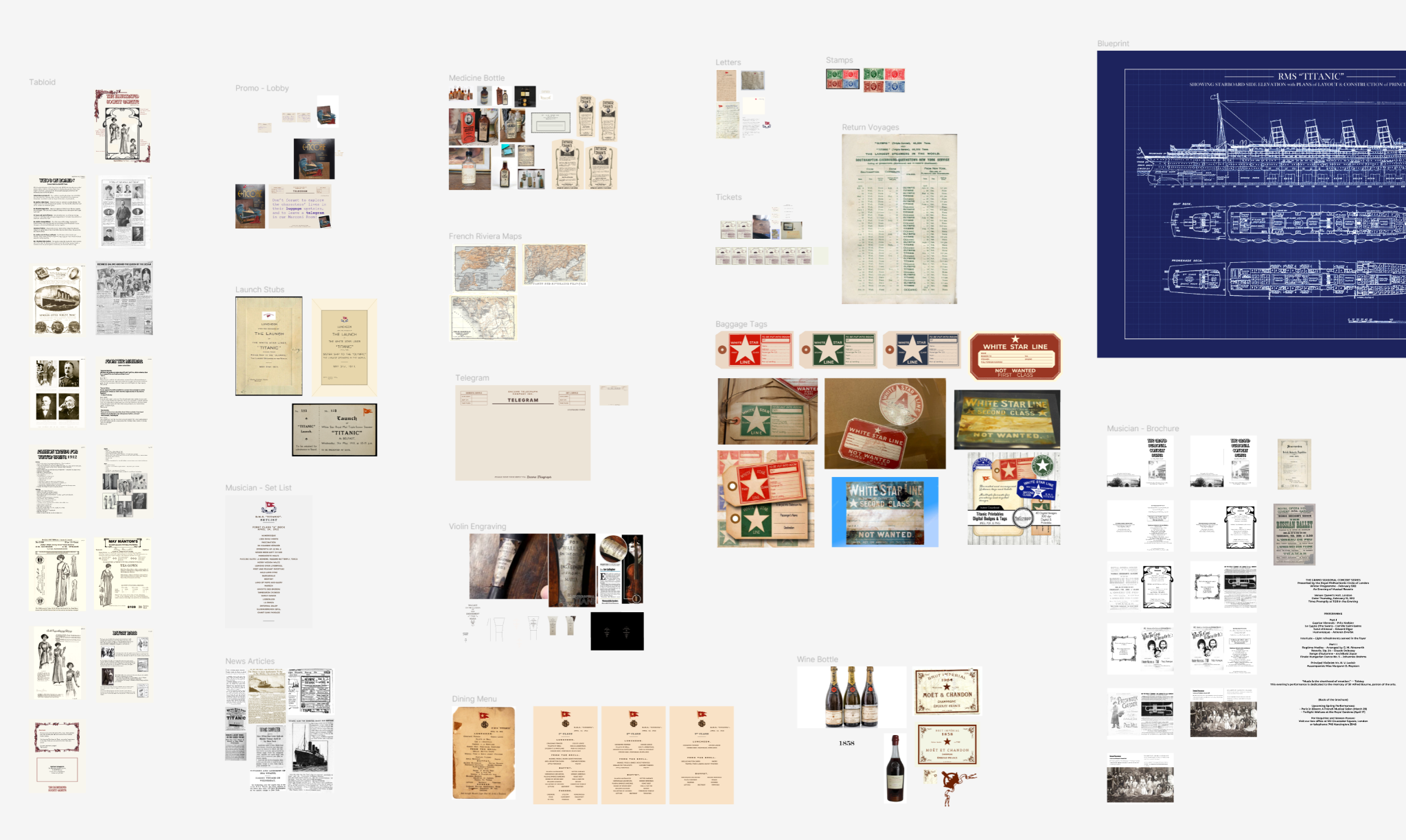
Fabrication on Figma
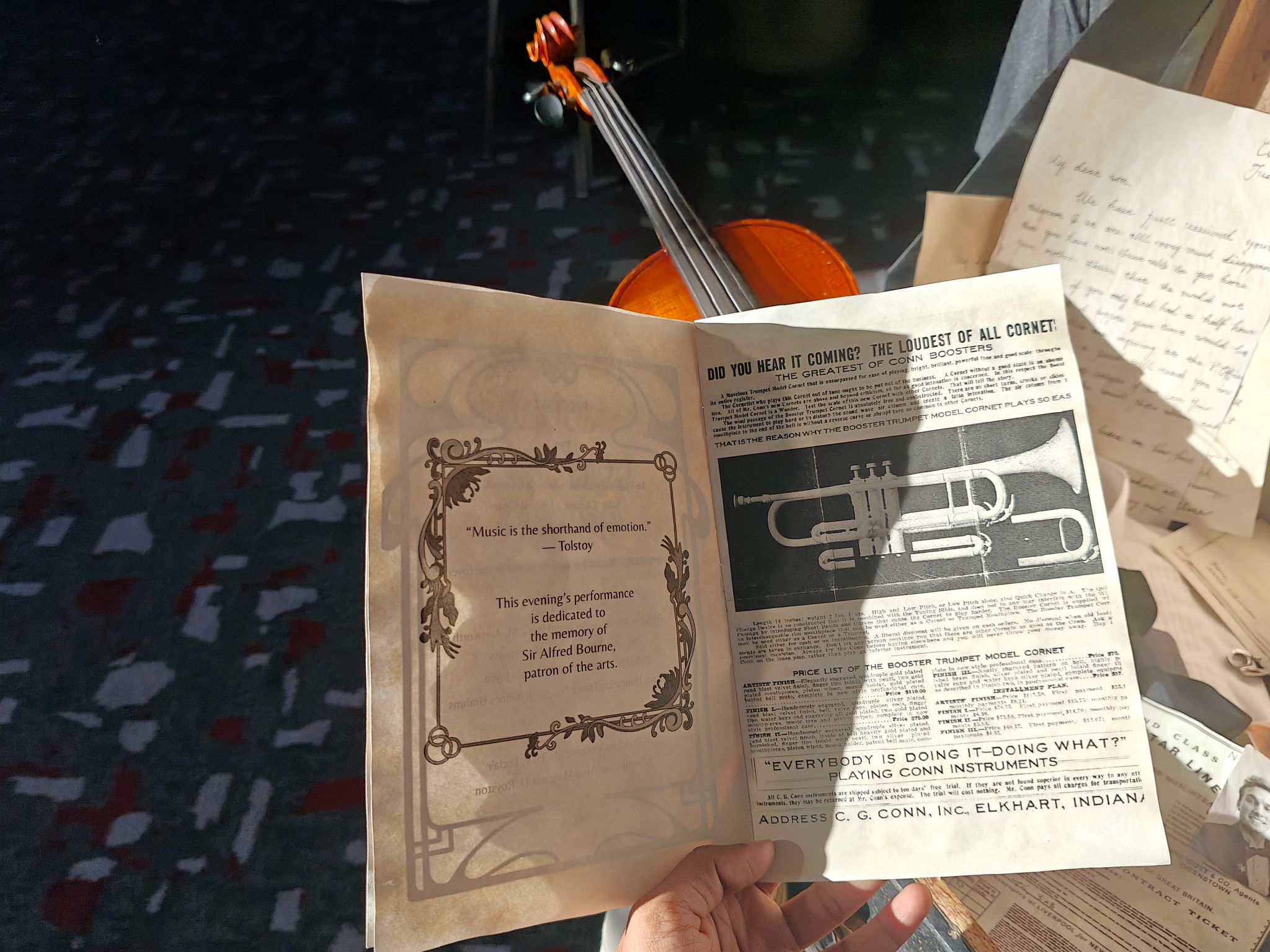
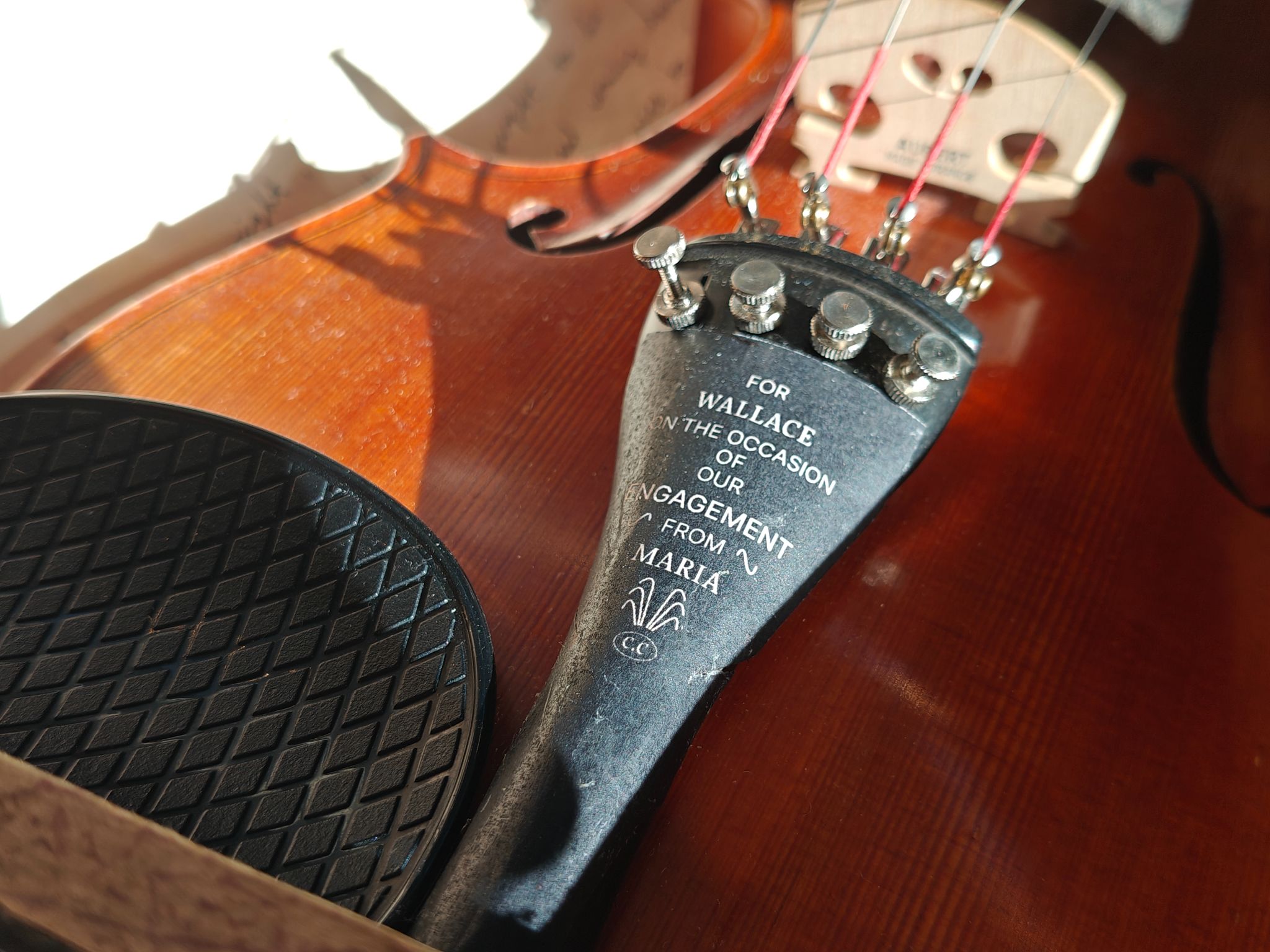
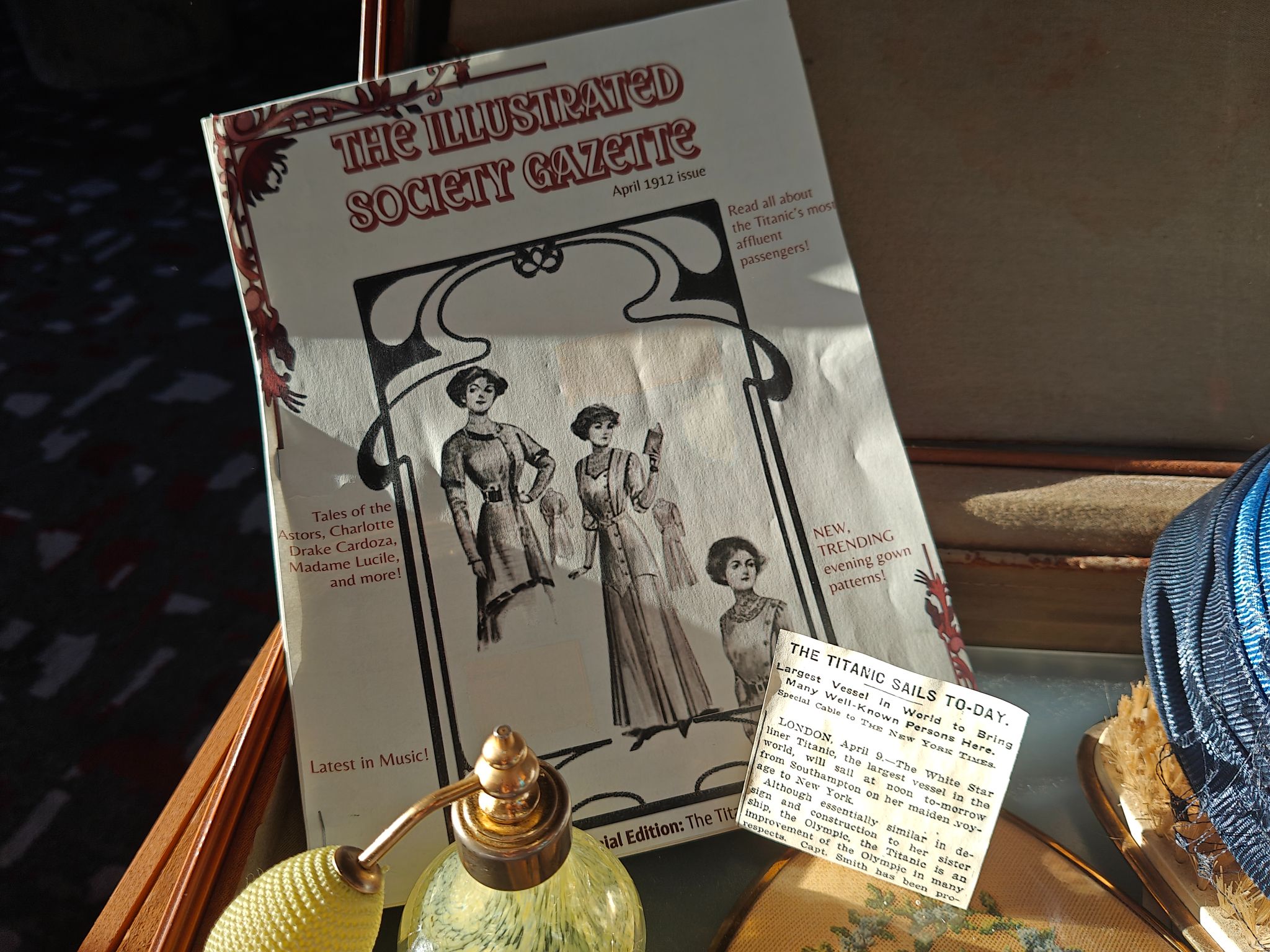
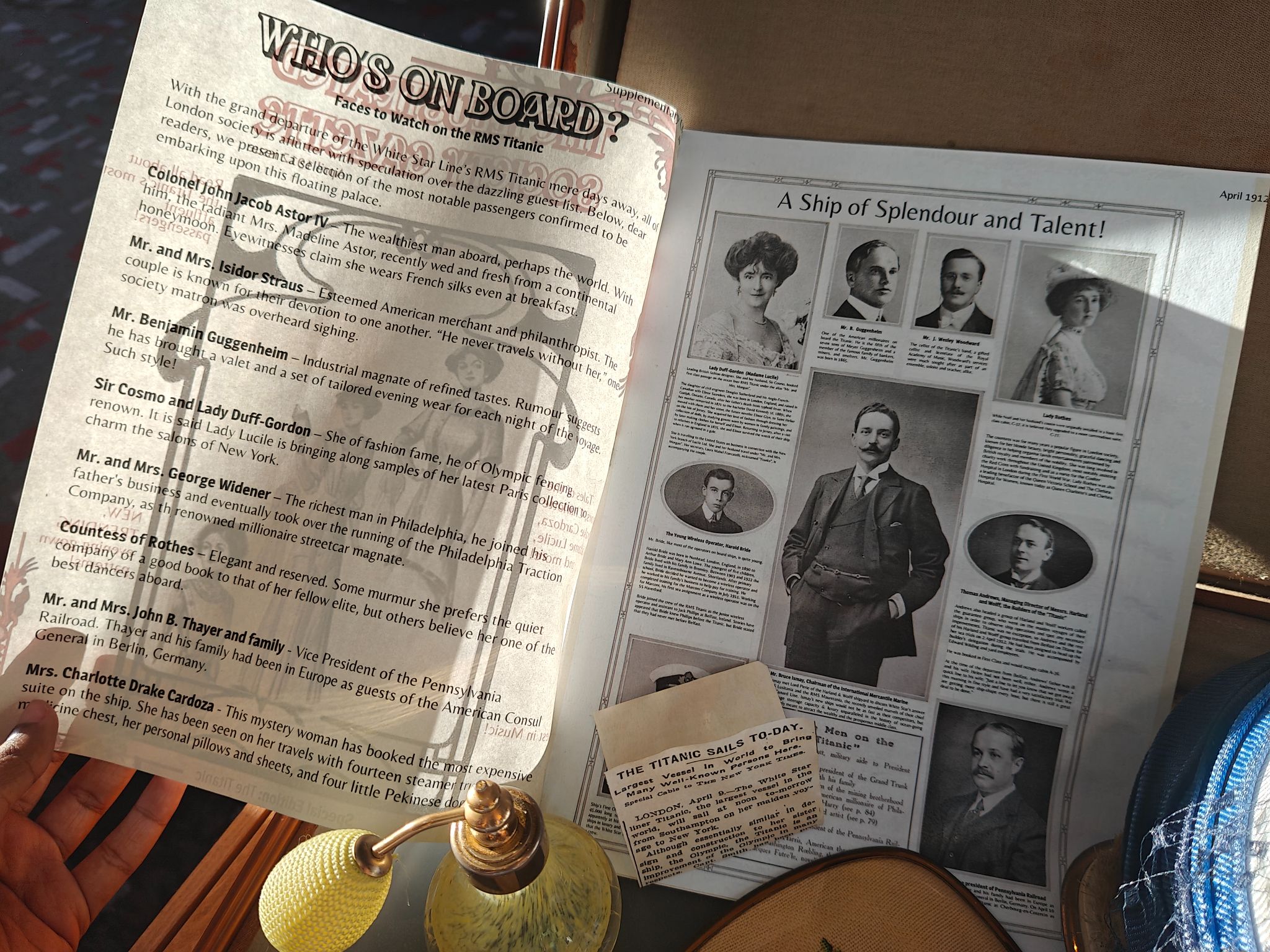
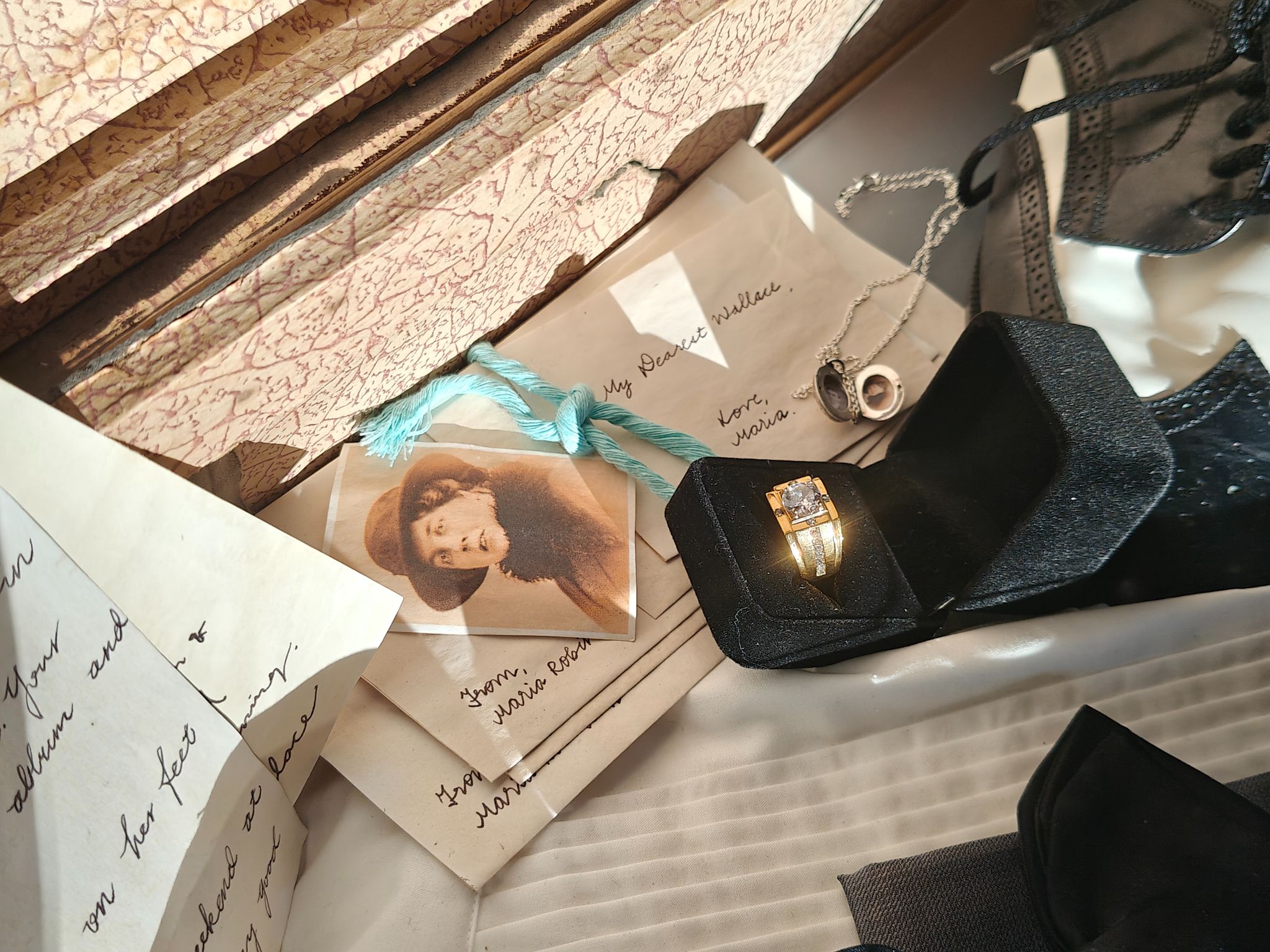
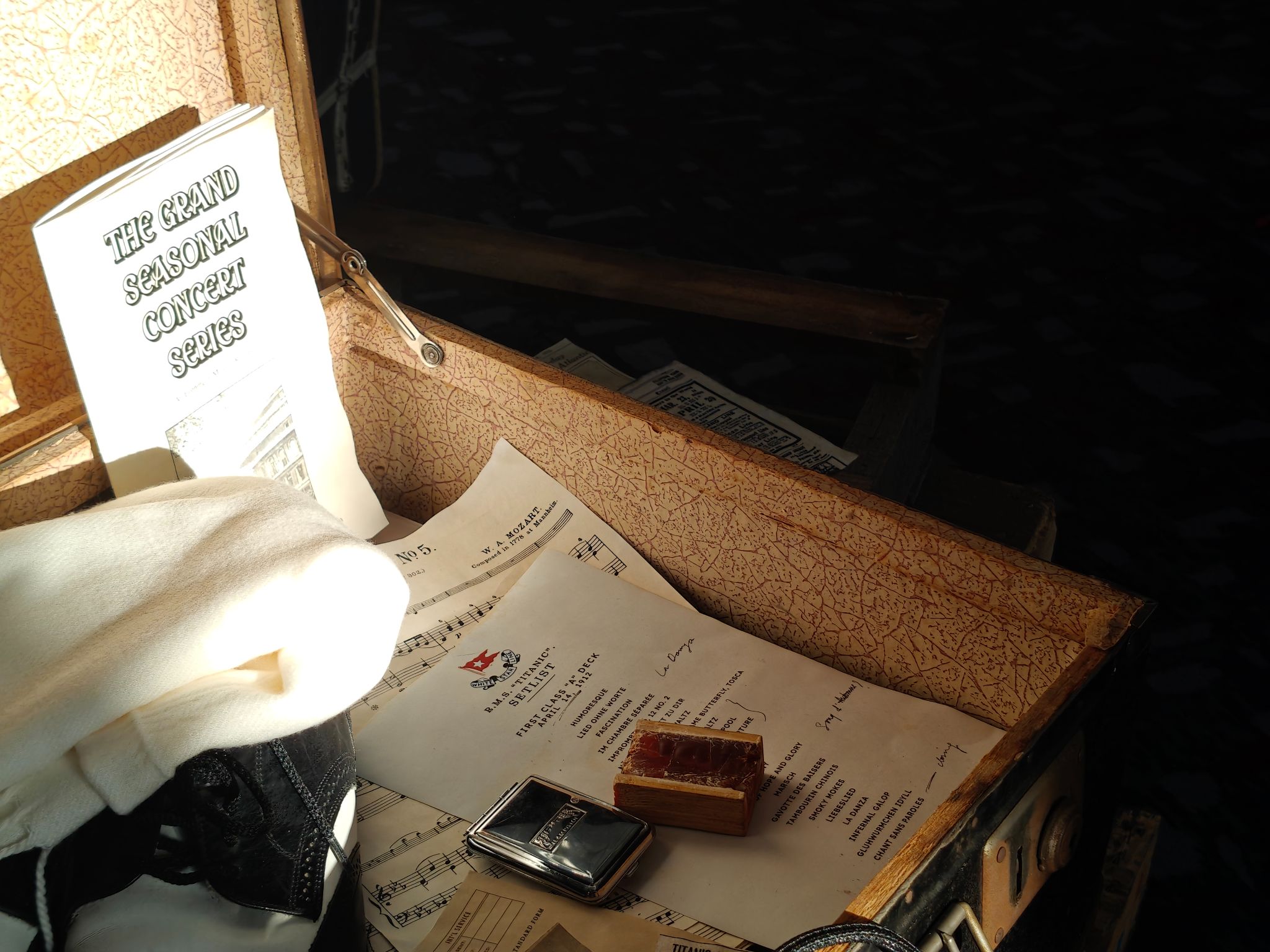
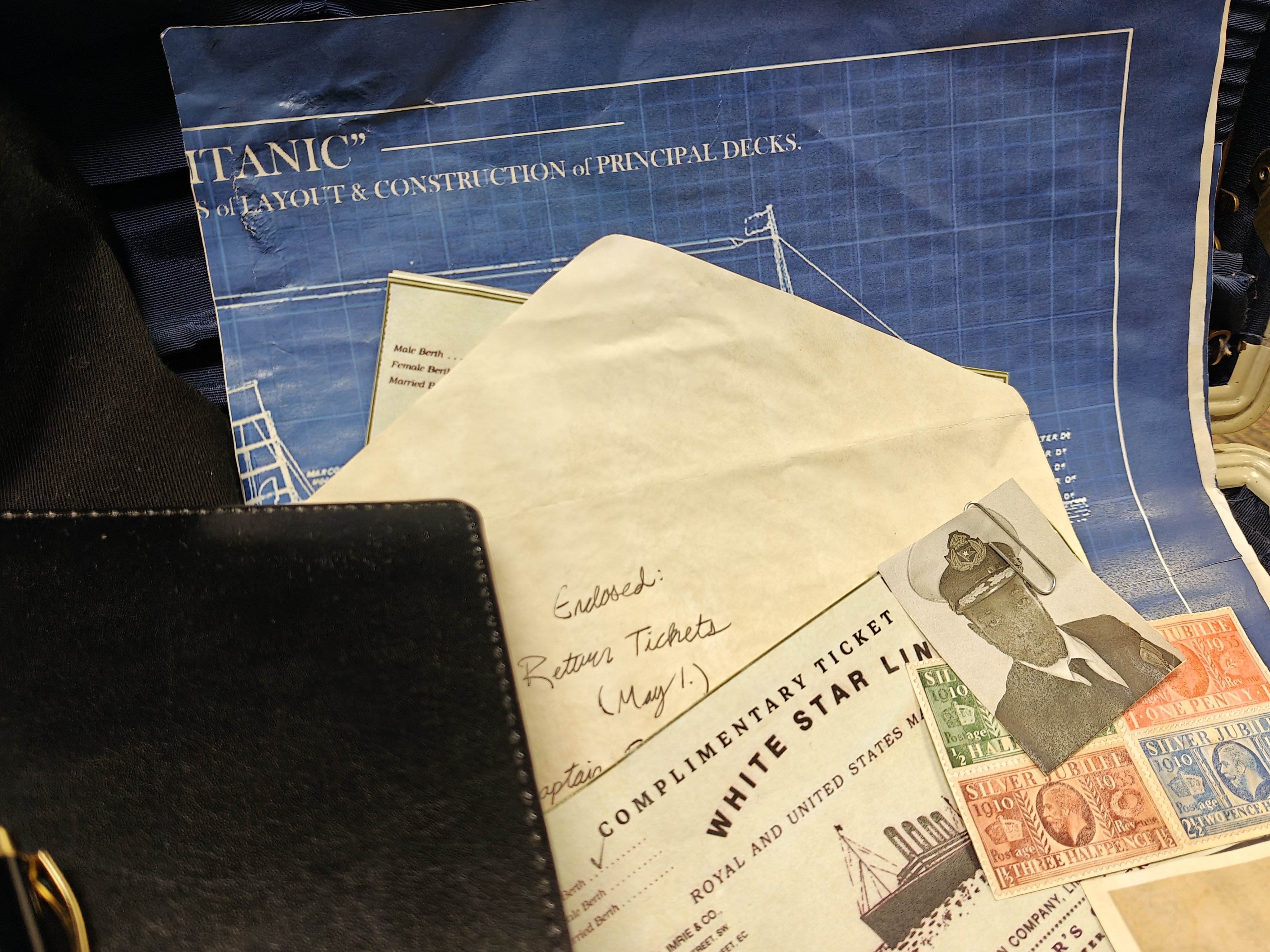
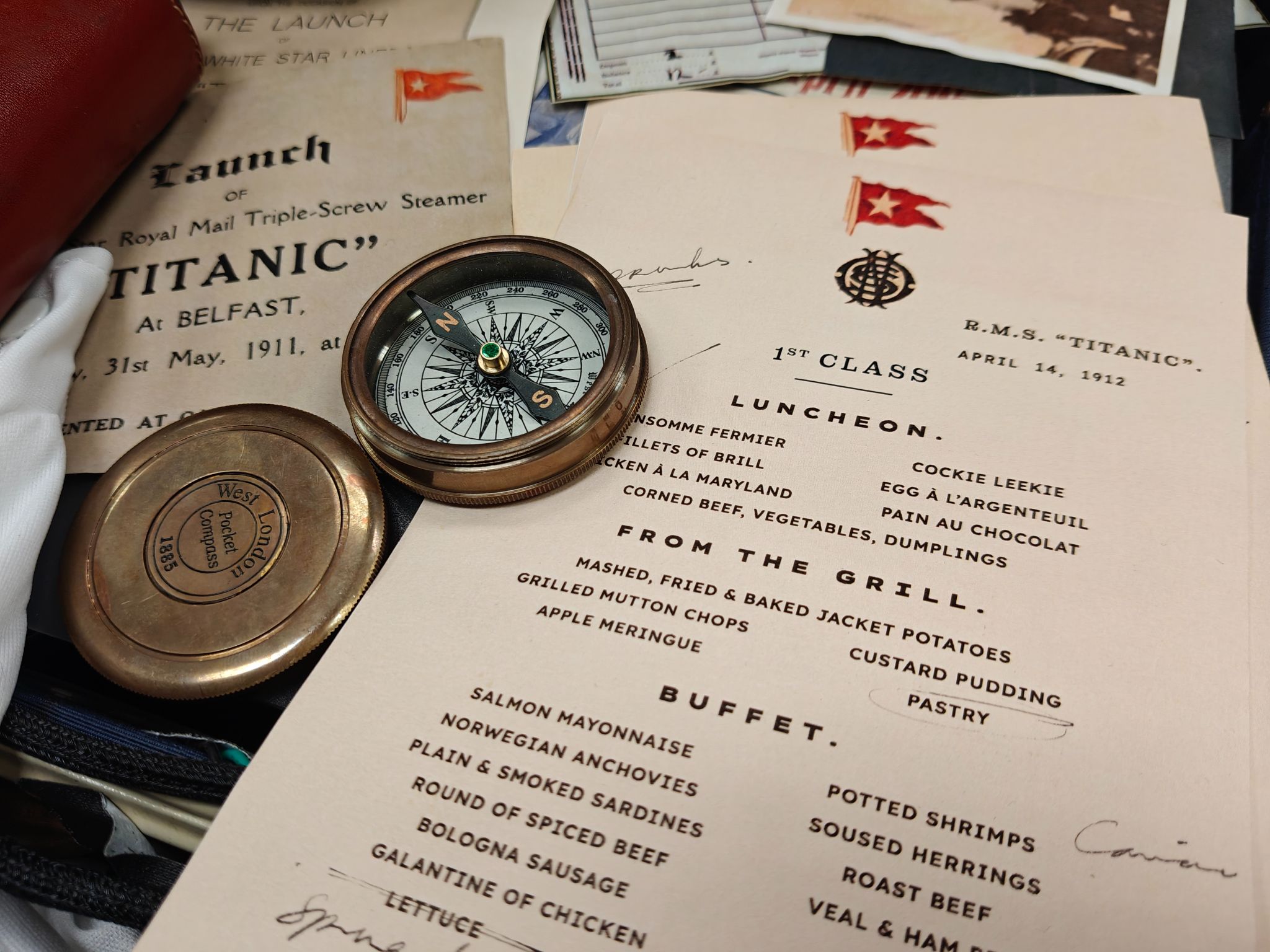
Closeup Props
3D Printing and Audio Interactions
I also designed and 3D printed old telephone receivers for us to attach our speakers to, as playtesting
showed that people felt our original, anachronistic phone handsets looked out of place and weren't loud
enough.
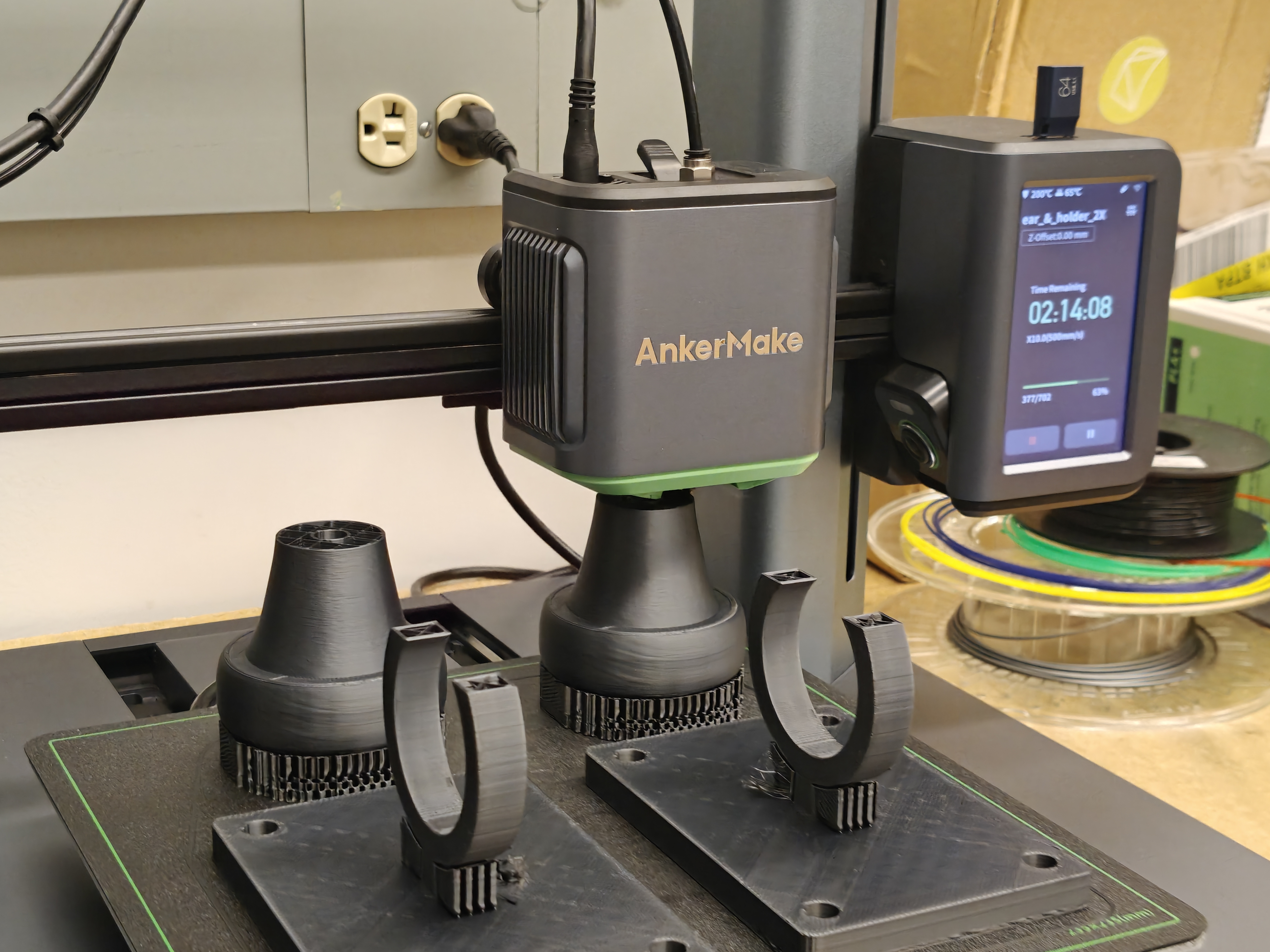
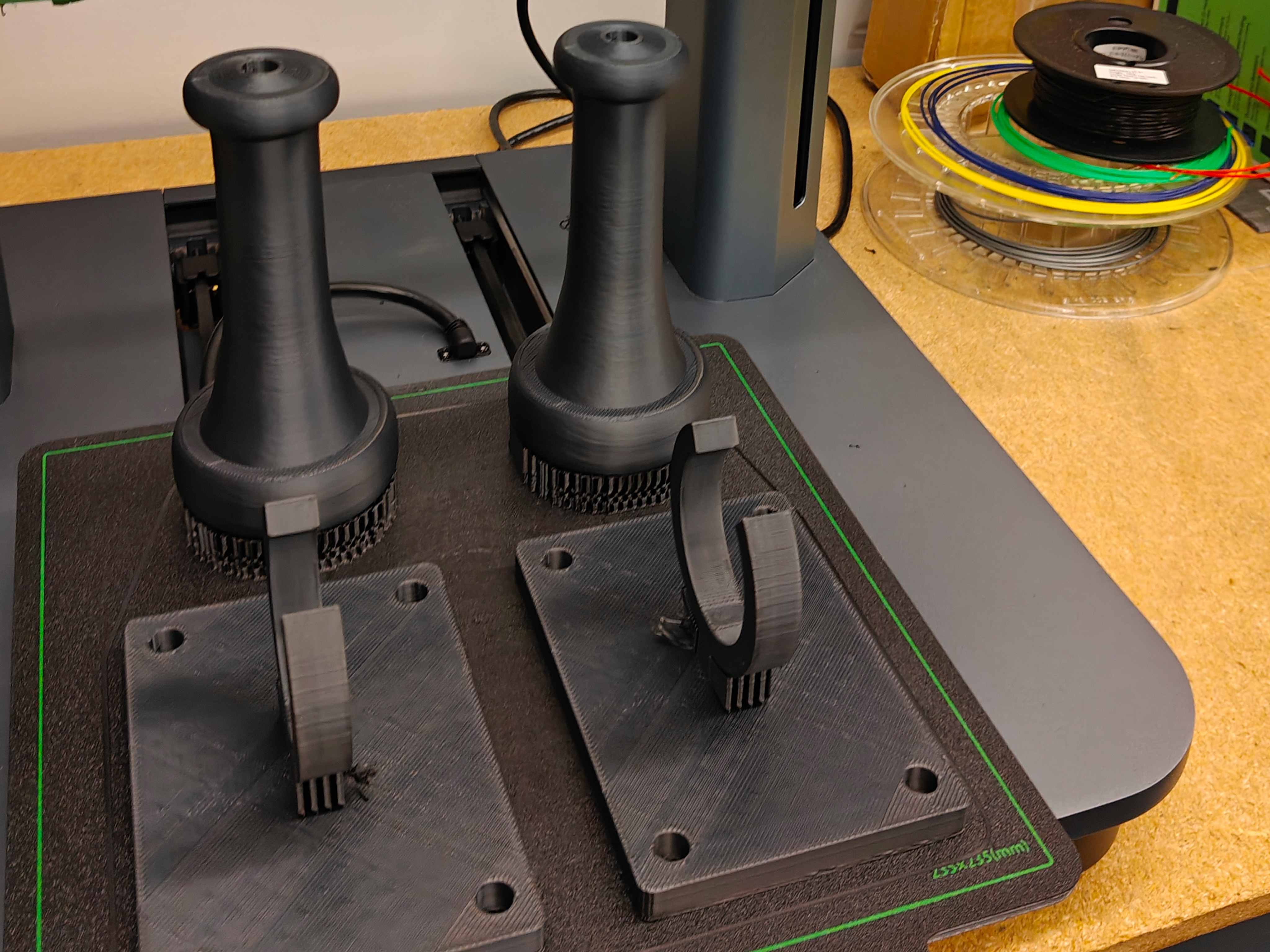
3D printing our speakers and holders
🤔 Problem
Guests may not place the telephone receivers in the correct orientation with the magnetic sensors, breaking
the circuit unintentionally.
🧠 Design Thinking
How do we make orientation irrelevant? The ideal solution is one that works regardless of how users
interact with the object.
💡 Solution
Added copper strips all along the receiver and its holder so that the circuit closes no
matter which way it's placed.
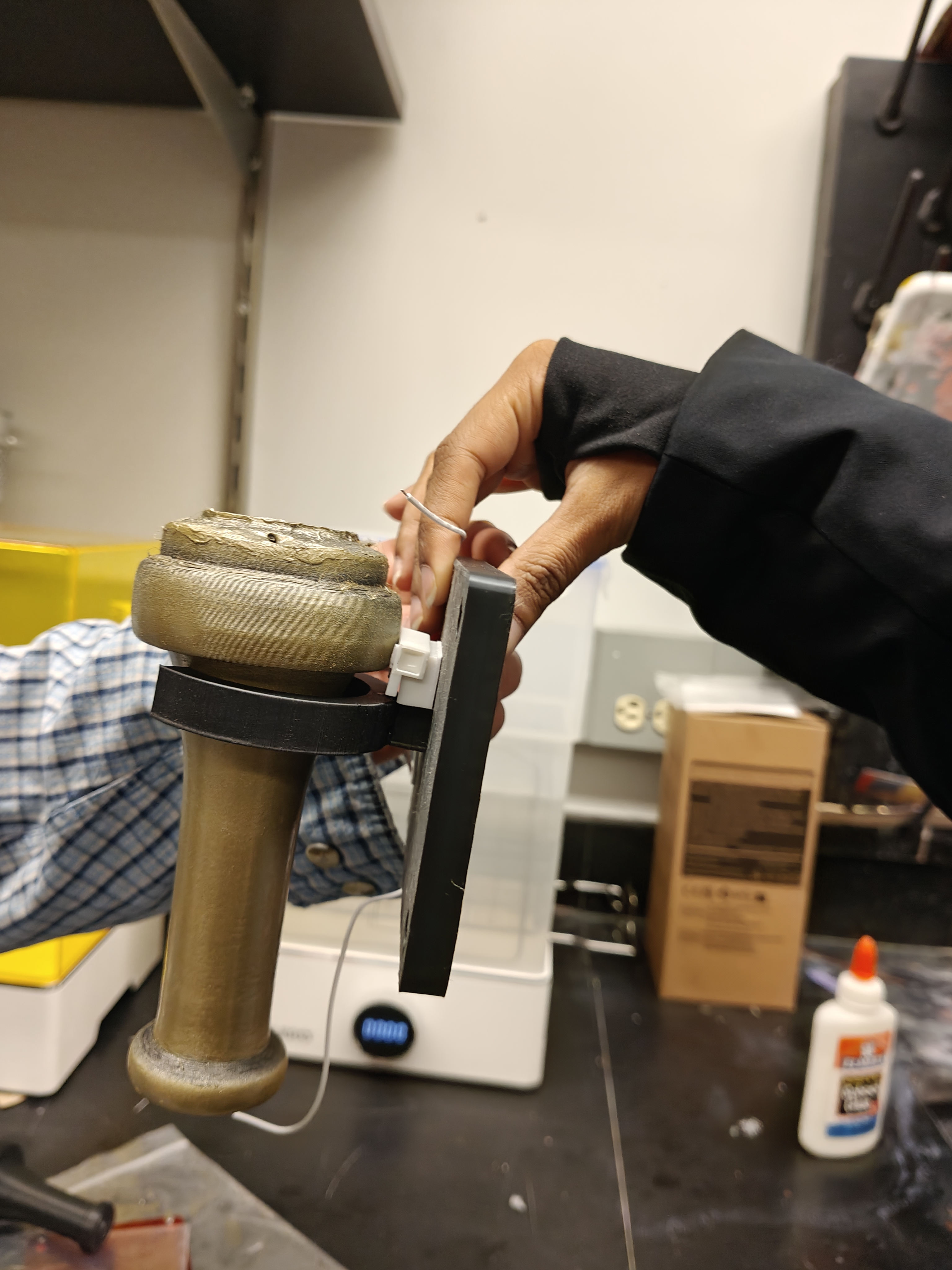
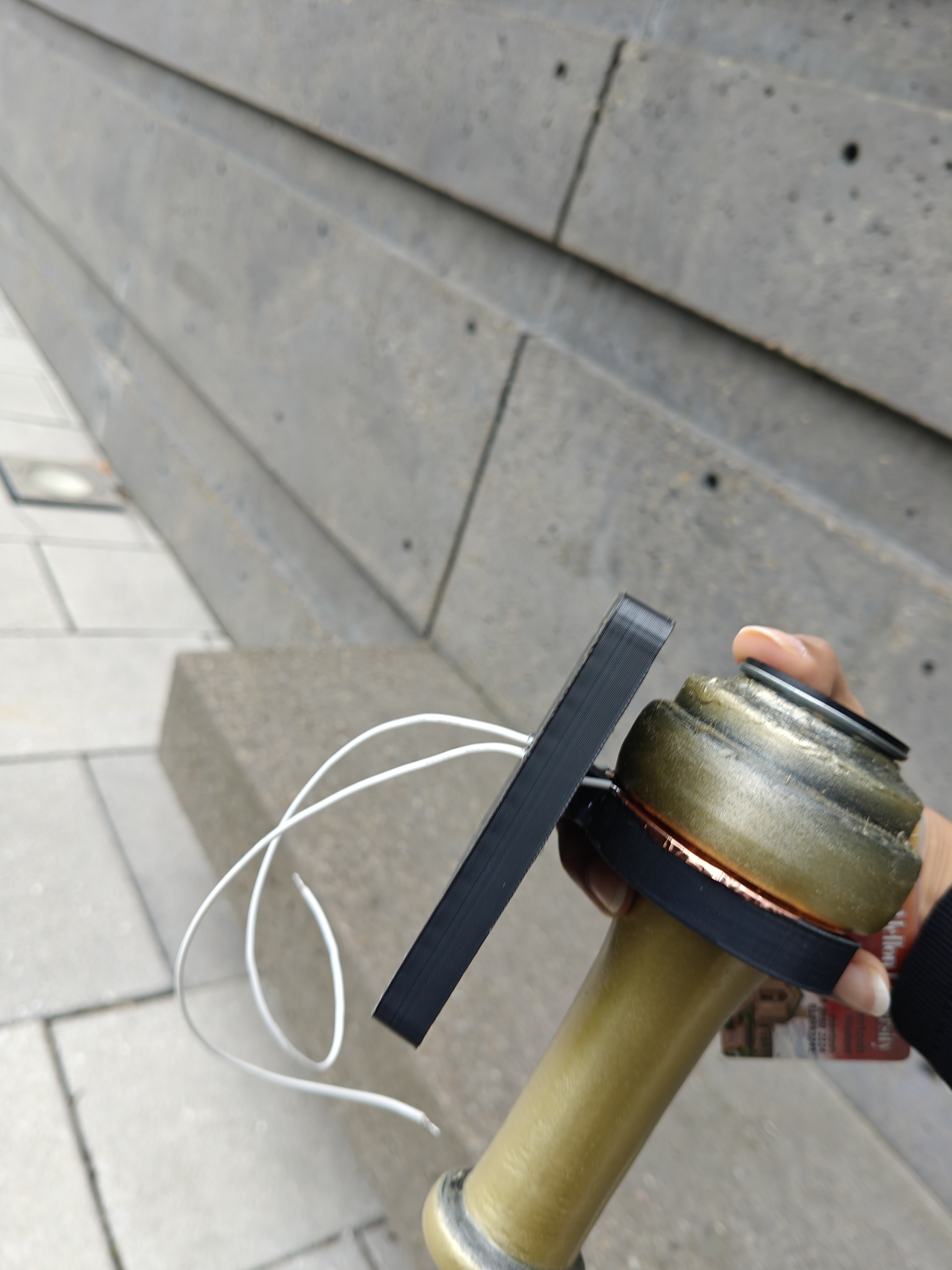
Testing with (1)magnetic sensors and (2)copper strips as a conductor, to detect
when the earpieces are picked up vs. put down
Using the copper strips helped us solve the issue of ensuring people always put down the earpiece in the
correct orientation for it to count as "closed" and for the audio to stop. Now, the earpiece can be spun anyway
you want, and only reads as "open" when it is lifted up off the holder.
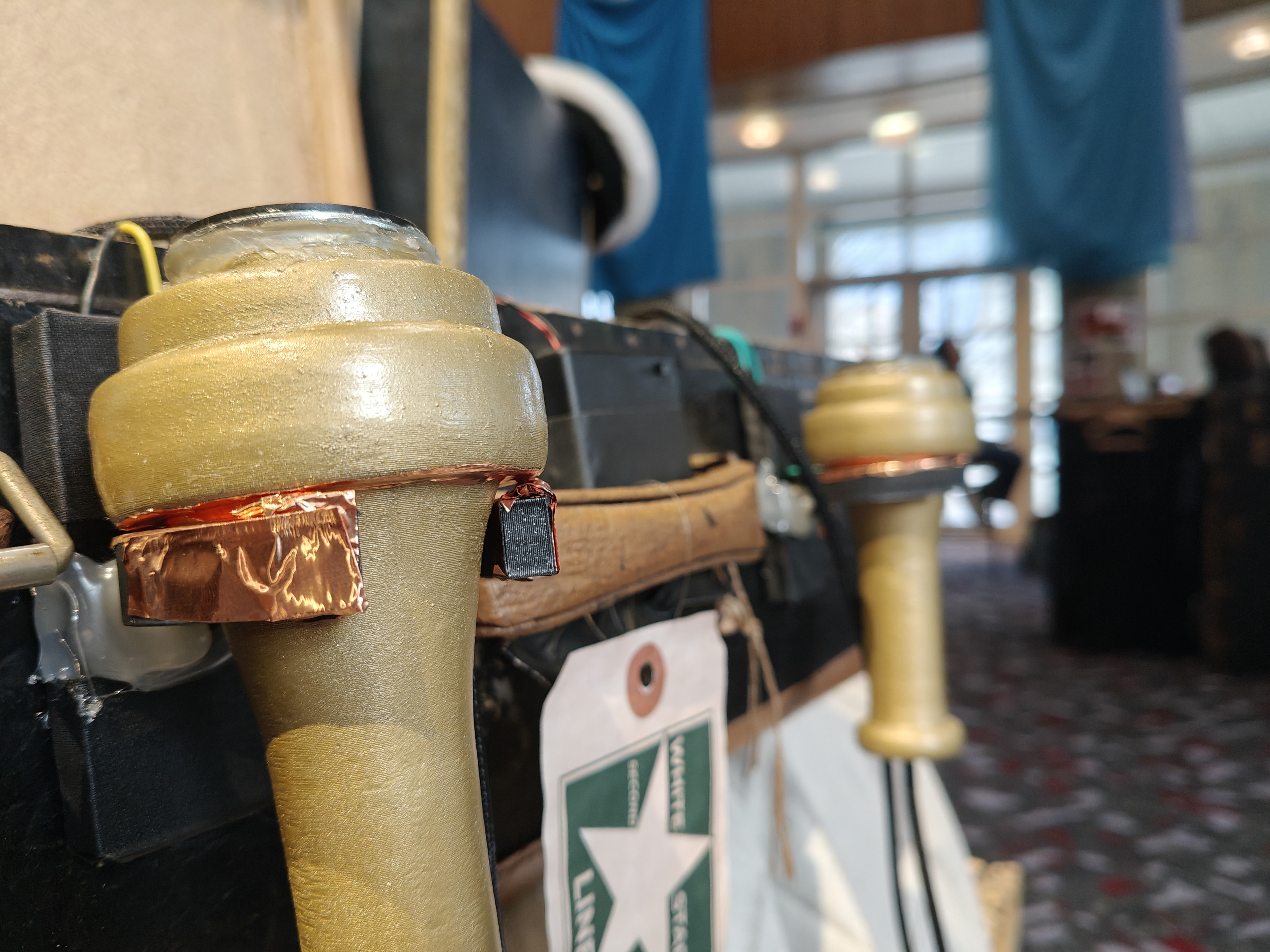
Earpieces on the final luggage installation!
Lobby Setup
First, second, and third class stations, the Captain, the Musician, and the Marconi Room!
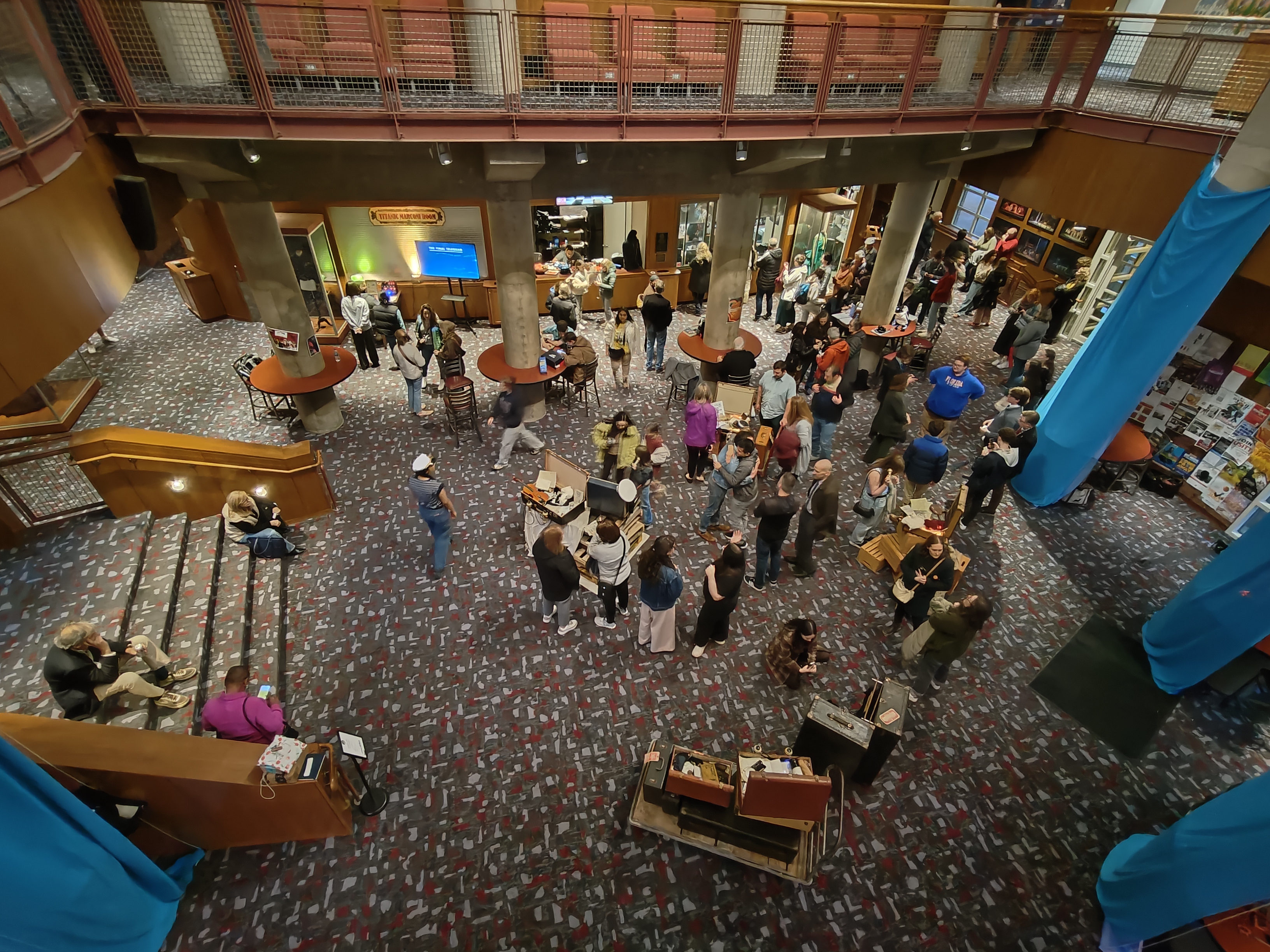
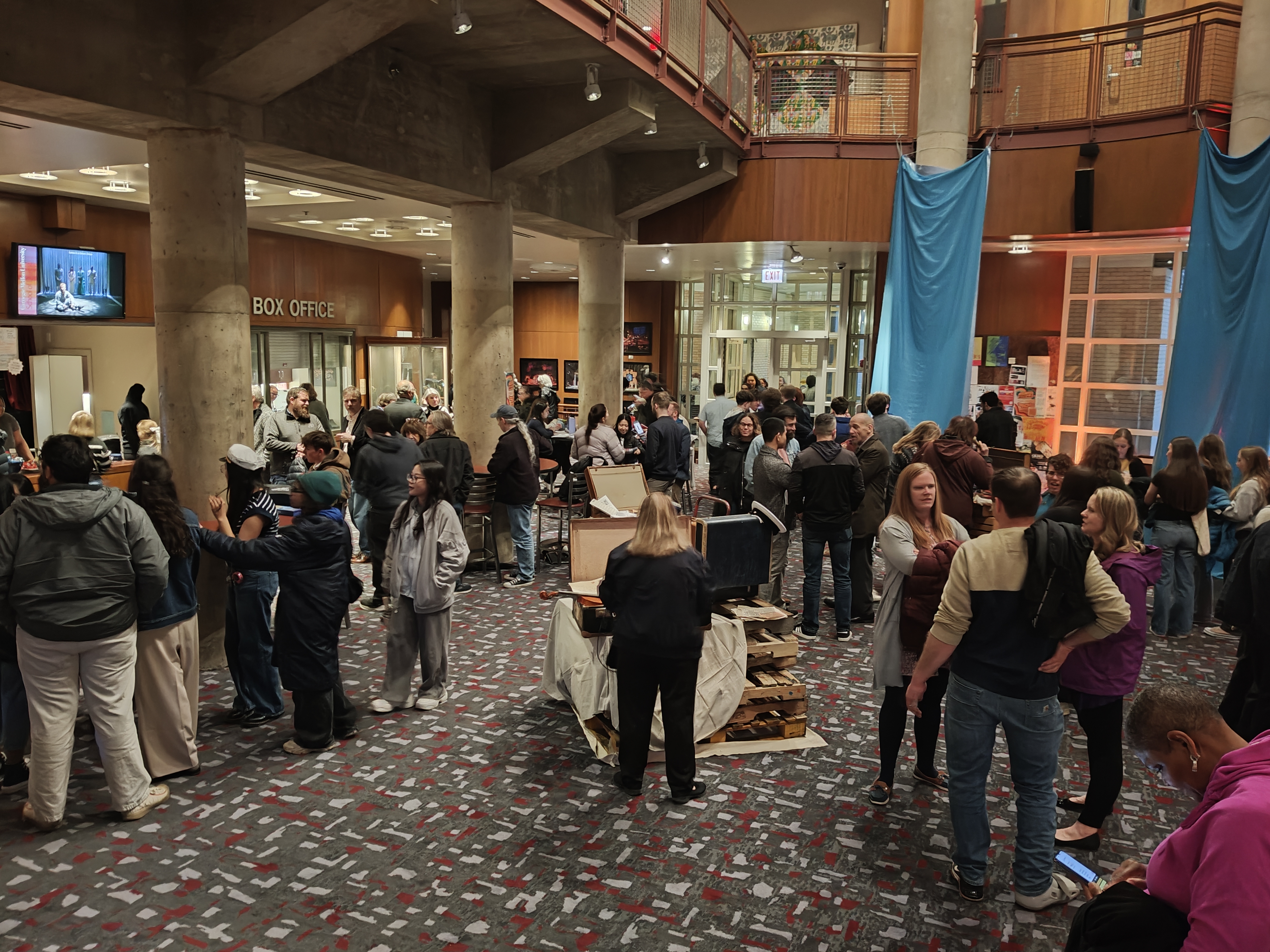
Lobby during pre-show
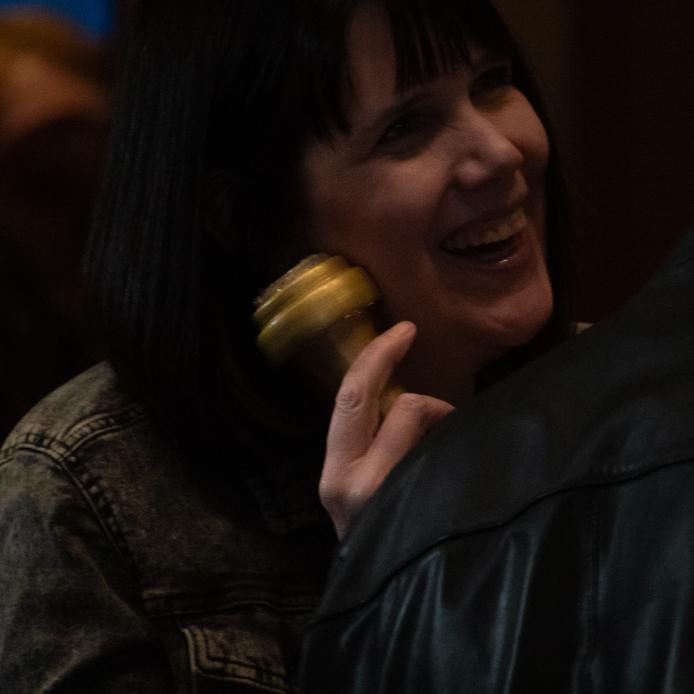
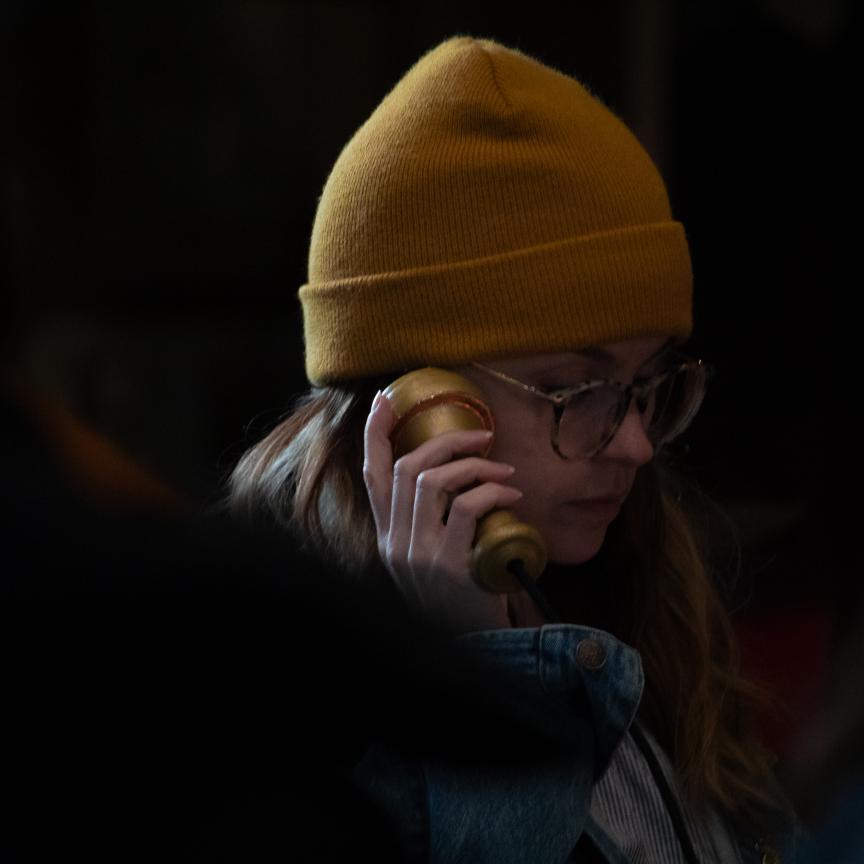
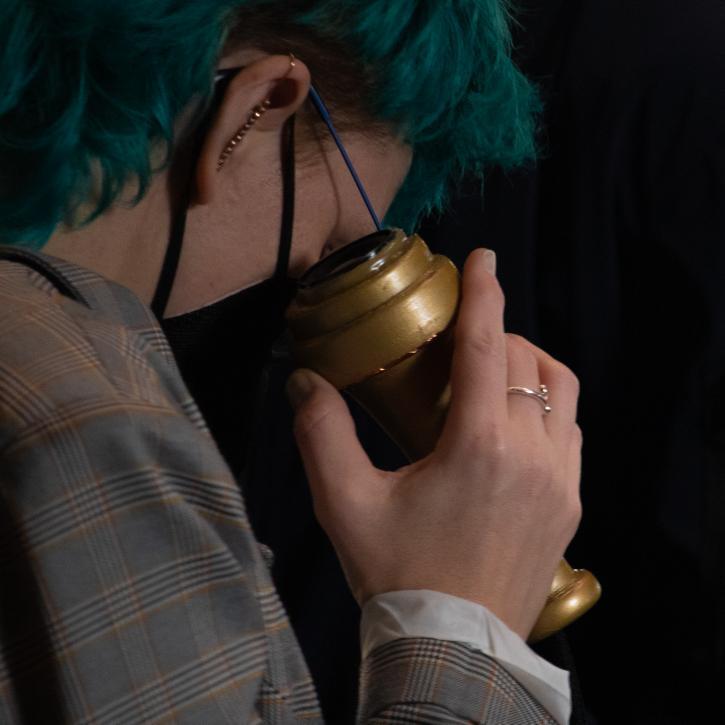
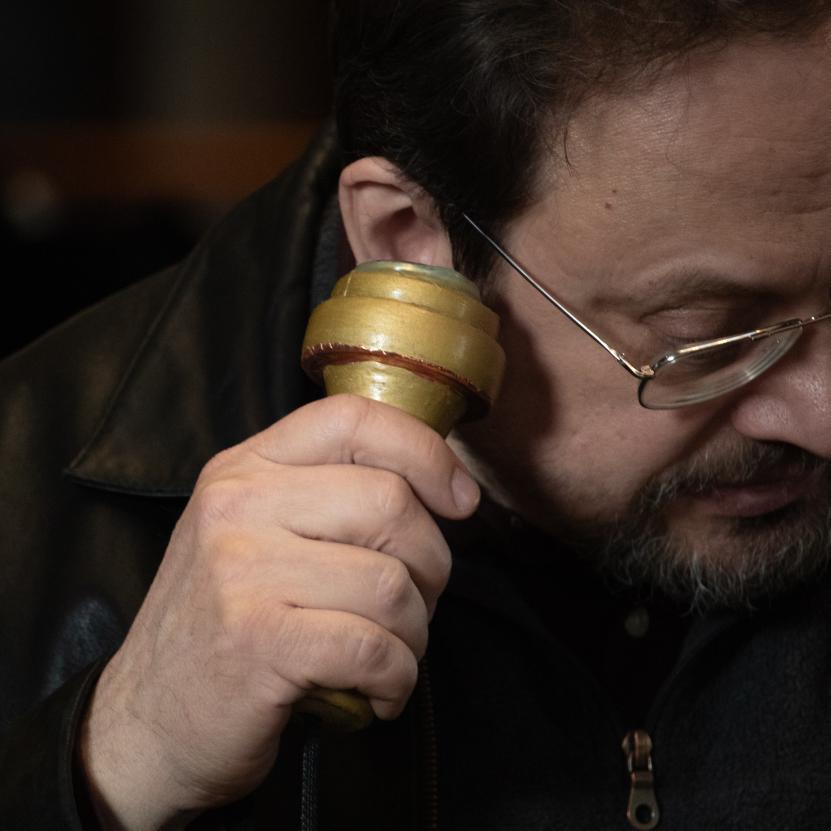
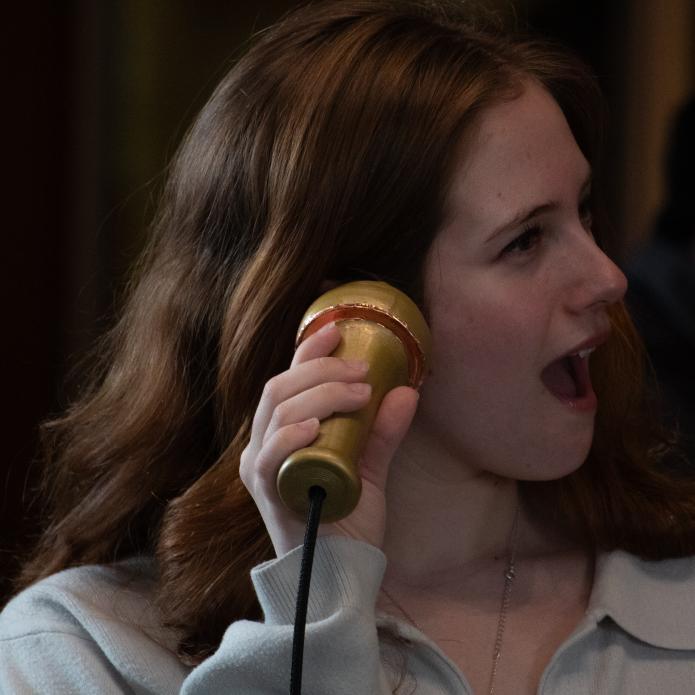
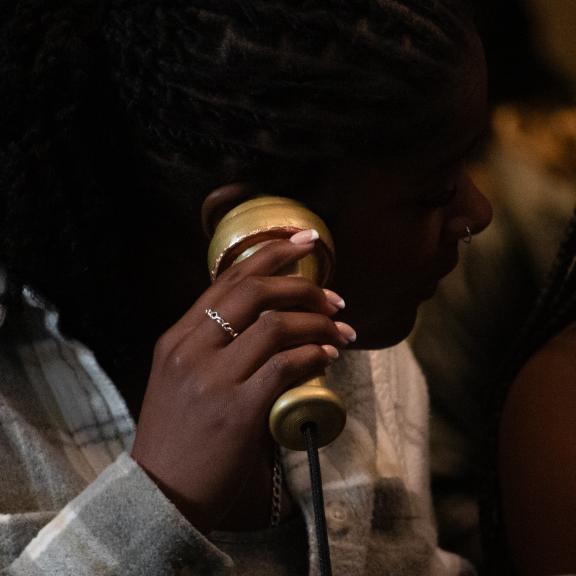
Reactions! (Photographer: José Mireles)
Final Lobby Experience
April 2025, the lobby is set up for the musical, and we learn surprising things from guests and how they
interact with the installation!
The following videos were directed and filmed by Sarah Wille, our producer.
Alice and Edgar Beane - demonstrated by Jasmin
Wallace Hartley - demonstrated by Devika
Marconi Room Telegram Station - Demonstrated by Anna
Project Design Production
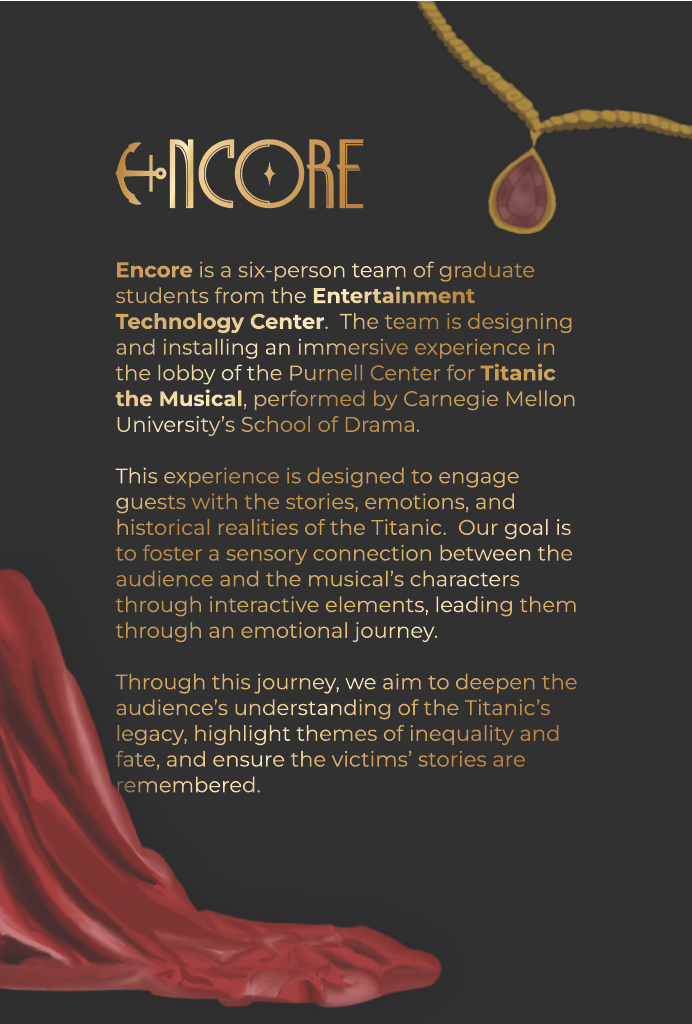
My role also involved designing the project's logo, poster, and the half sheets that would tell visiting
guests at the ETC what our team does and what our project is about.
Presenting... Team Encore!
More
For weekly dev logs written by our producer, Fay Li, visit our website at
https://projects.etc.cmu.edu/encore/
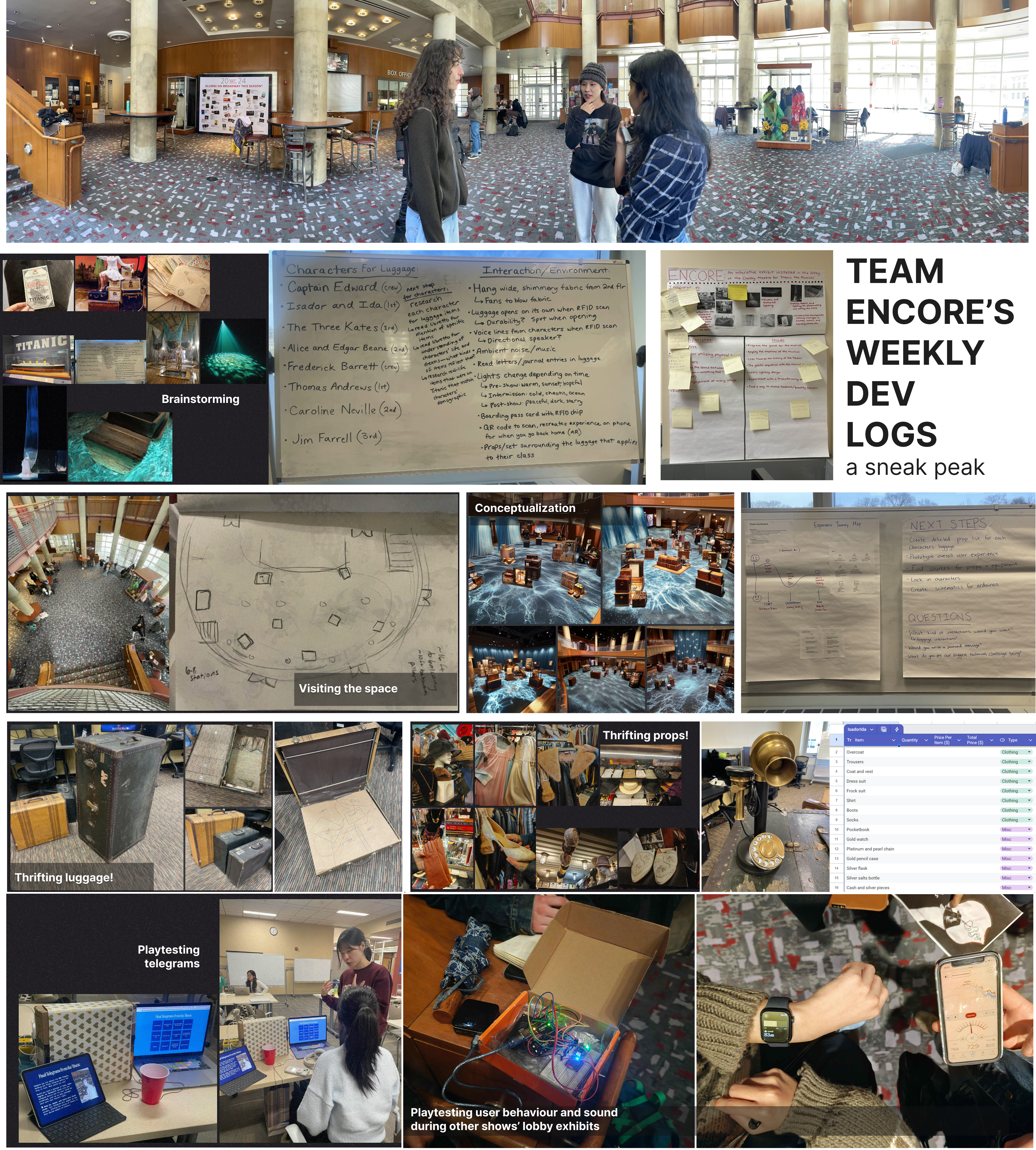
For more, visit our website!
Check out some of my other projects!